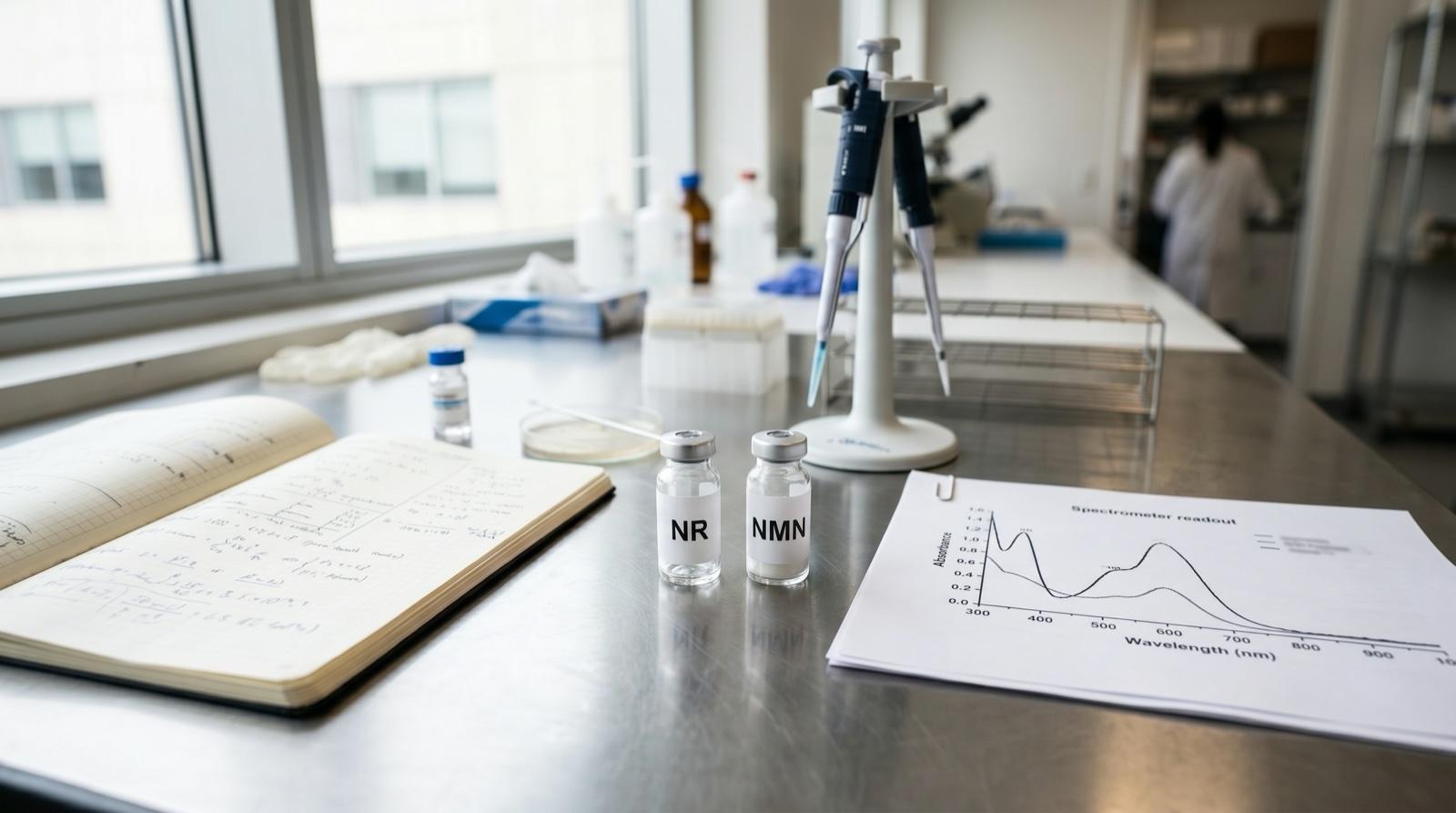
CD38 Inhibitors: The NAD+ Longevity Target That Isn't a Supplement
CD38 is the enzyme that drains NAD+ with age. CD38 inhibitors (78c, apigenin, MK-0159) target the leak — not the supply. Here's where the research stands in 2026.
CD38 is an enzyme that destroys NAD+. It is not a precursor, not a pathway enzyme, and not something you can directly address with NR or NMN. It is the dominant NAD+-degrading hydrolase in aging tissues — and the reason some researchers argue that supplementing precursors alone may be fighting an accelerating leak rather than fixing it.
What is CD38?
CD38 (cluster of differentiation 38) is a multifunctional ectoenzyme expressed on the surface of immune cells, muscle, liver, and most metabolically active tissues. Its primary enzymatic role in NAD+ biology is as a hydrolase and cyclase — it cleaves NAD+ into nicotinamide and ADP-ribose (or the cyclic form, cADPR), generating calcium-mobilizing second messengers in the process.
The calcium signaling function is likely why CD38 persisted through evolution. The cost is that it consumes NAD+ at a rate that, in younger organisms with high NAMPT-driven salvage activity, is easily replenished. With age, the balance tips: CD38 expression rises while the salvage pathway's capacity to regenerate NAD+ falls.
CD38 is also a marker of immune activation. Lymphocytes upregulate CD38 expression during viral infection and inflammatory states — which is part of why chronic low-grade inflammation (“inflammaging”) accelerates NAD+ depletion in older adults. The CD38 mechanism page covers the full enzymatic cycle and calcium-signaling context in detail.
Why CD38 matters for NAD+ decline with age
Camacho-Pereira et al. published the key quantitative evidence in 2016 (Cell Metab, PMID 27097031). Using mouse models with genetic CD38 deletion and tissue-specific NAD+ measurements, they demonstrated that CD38 knockout mice maintain NAD+ levels into old age — and that aging wild-type mice show a 2-3x increase in CD38 enzymatic activity alongside a 50% drop in tissue NAD+.
The inference is direct: if CD38 activity is the dominant source of NAD+ loss, then raising NAD+ supply without limiting CD38 activity is fighting the drain rather than stopping it. The primer on NAD+ decline with age covers the full quantitative picture — CD38, NAMPT decline, and PARP activation together explain the ~50% tissue NAD+ reduction observed between age 20 and 70.
This creates the core mechanistic rationale for CD38 inhibition as a longevity strategy: rather than supplying more NAD+ substrate, slow the rate at which NAD+ is destroyed. The two approaches are not mutually exclusive — in the Camacho-Pereira model, CD38 knockout combined with NMN supplementation produced additive NAD+ elevation. But the inhibitor strategy addresses the upstream cause rather than compensating downstream.
78c — the research-grade tool compound
The CD38 inhibitor compound 78c was developed at Genentech as a research pharmacology tool. Tarrago et al. (2018, Cell Metab, PMID 29893688) published the foundational characterization: oral 78c in aged mice increased tissue NAD+ levels, improved glucose tolerance, and enhanced mitochondrial function. The efficacy profile matched what CD38 knockout genetics predicted — validating CD38 as a pharmacological target, not just a genetic one.
The Tarrago 2018 paper is the most-cited proof-of-concept for CD38 inhibition as a metabolic intervention. The study design was rigorous for a preclinical pharmacology paper: aged mice (24 months), multiple tissue types measured, dose-response established, and combination with NMN tested. NMN combined with 78c produced higher tissue NAD+ than either alone in liver and muscle — the complementarity result that forms the mechanistic basis for combination strategies.
What 78c established is the pharmacological plausibility of the approach — that a small molecule can inhibit CD38 in vivo, that the biochemical consequence is sustained tissue NAD+ elevation, and that the combination with precursor supplementation is additive rather than redundant. The translation question — whether any CD38 inhibitor safe for human use can replicate this in humans — remains open.
Apigenin — the natural CD38 inhibitor
Apigenin (4',5,7-trihydroxyflavone) is a flavone found in parsley, celery, chamomile tea, and related plants. Escande et al. (2013, Diabetes, PMID 23172919) characterized its CD38-inhibiting activity in vitro, reporting an IC50 of approximately 10 micromolar — a level of potency that, if achievable in vivo, would meaningfully reduce CD38 activity.
The core problem is bioavailability. Oral apigenin is poorly absorbed — estimated at 0.2-1% across most pharmacokinetic assessments — and undergoes rapid phase II conjugation in the gut and liver. Whether supplemental apigenin reaches CD38-inhibiting concentrations (roughly 10 micromolar) in target tissues has not been demonstrated in a controlled human pharmacokinetic study. The in vitro IC50 is a starting point for drug development, not a guide to supplement dosing.
This does not mean apigenin has no biological activity in humans — some conjugated metabolites may be active, and gut-level effects are plausible. It means the specific claim “apigenin inhibits CD38 in human tissue at dietary doses” is unsubstantiated. The evidence grade is preclinical: activity demonstrated in cell culture and some animal models, human pharmacokinetic data insufficient to confirm target engagement.
Apigenin is also a mild SIRT1 and SIRT2 deacylase modulator in some models. The sirtuins mechanism pagecovers how SIRT1 activity intersects with the NAD+ pool more broadly — relevant context for understanding whether apigenin's effects on NAD+-consuming enzymes might be complementary or conflicting.
CD38 inhibitors vs NR/NMN precursors
The strategic distinction is supply versus demand. Precursors like NR and NMN increase NAD+ biosynthesis through the salvage pathway — they feed more substrate into the system. CD38 inhibitors reduce the rate at which NAD+ is consumed — they slow the dominant age-related hydrolase.
The head-to-head comparison in the NR vs NMN analysis is useful framing: even the best-documented precursor comparisons show blood NAD+ elevation of 30-170% at studied doses. CD38 knockout in mice produces tissue NAD+ preservation that matches the profile of young animals. Whether pharmacological inhibition achieves the same result in humans — without the off-target effects of complete CD38 loss — is the key unknown.
The practical implication today is limited: no CD38 inhibitor with proven human target engagement and an acceptable safety profile is commercially available. Precursor supplementation remains the only approach with human clinical trial data behind it. The CD38 inhibitor story is the rationale for why that approach may have ceiling effects — and the scientific case for a class of drugs that does not yet exist for this indication.
Drug development pipeline 2026
Several pharmaceutical programs are advancing CD38 inhibitors, though primarily for indications outside of longevity or metabolic disease. The most commercially advanced CD38-targeting agents are antibodies developed for multiple myeloma: daratumumab (Darzalex, J&J) and isatuximab (Sarclisa, Sanofi). These work by binding CD38 on malignant plasma cells and triggering immune-mediated destruction, not by inhibiting the enzyme's NAD+-hydrolase activity directly. They are not appropriate tools for NAD+ management in healthy aging.
Small-molecule CD38 inhibitors in development for metabolic or longevity indications include programs at Mitobridge (acquired by Astellas), Calico (Alphabet), and several academic spinouts. As of early 2026, none have published Phase 2 efficacy data in human aging or metabolic endpoints. The clinical development path for this class faces the same challenge as all longevity drugs: the FDA does not recognize aging as an indication, making trial design and regulatory endpoints non-trivial.
MK-0159 is a Merck small-molecule CD38 inhibitor that has appeared in preclinical and early clinical disclosures. Like 78c, it was characterized as a pharmacological tool for target validation before any decision on clinical indication was made. Publicly available human data on MK-0159 efficacy or safety is limited at this writing.
Safety considerations from CD38 knockout studies
CD38 knockout mice (CD38−/−) are viable, reproduce normally, and show improved metabolic profiles in aging studies — higher tissue NAD+, better glucose tolerance, improved mitochondrial function (Barbosa 2007, PMID 17715268). This is the biological argument that CD38 loss, at least in mice, is broadly beneficial.
The nuances matter. CD38−/− mice show altered humoral immunity — specifically reduced IgG1 responses after T-cell-dependent antigen challenge. The mechanistic basis is CD38's role in B-cell and T-cell differentiation, where cyclic ADP-ribose (cADPR) generated by CD38 acts as an intracellular calcium-mobilizing signal during antigen responses.
CD38 knockout mice also show changes in social behavior linked to impaired oxytocin release from the hypothalamus — a finding that generated interest in CD38's role in autism research but creates a genuine question about pharmacological CD38 suppression in adults. Whether partial enzymatic inhibition (the likely result of a small molecule at therapeutic doses) produces immune or behavioral phenotypes similar to complete genetic knockout is unknown. Genetic knockout is a blunt instrument compared to pharmacological inhibition, so extrapolating knockout phenotypes directly to drug risk is imprecise — but the phenotypes flag the organ systems that warrant monitoring.
Current drug development for this class includes immune monitoring and oxytocin pathway assessments in preclinical toxicology packages, precisely because the knockout data raised these questions. The open-label period of any future Phase 1 trial would be expected to include immune function markers and neuropsychiatric assessments.
Frequently asked questions
- What is a CD38 inhibitor?
- A CD38 inhibitor is a small molecule that blocks the enzymatic activity of CD38, an NAD+-degrading hydrolase that becomes overexpressed with age and inflammation. By suppressing CD38 activity, these compounds preserve intracellular NAD+ rather than supplying more precursor — a fundamentally different strategy than NR or NMN supplementation. The most studied research compound is 78c (Tarrago 2018, PMID 29893688); the most studied natural compound is apigenin (Escande 2013, PMID 23172919).
- Is 78c available as a supplement?
- No. 78c is a research-grade tool compound developed at Genentech and used almost exclusively in animal pharmacology studies. It has no human trial data, no FDA approval, no GRAS status, and is not legally sold as a dietary supplement anywhere. Several biotech programs (Mitobridge/Astellas, Calico, Mitokinin) are developing proprietary CD38 inhibitors for clinical use, but as of early 2026 none have reached registrational trials.
- Does apigenin actually inhibit CD38 in humans at dietary doses?
- Apigenin inhibits CD38 in vitro with an IC50 of roughly 10 micromolar (Escande 2013, PMID 23172919). The unresolved question is bioavailability: oral apigenin is poorly absorbed (estimated 0.2-1% bioavailability per Cao 2017) and rapidly conjugated. Whether dietary or supplemental apigenin reaches CD38-inhibiting concentrations in human tissues has not been demonstrated in a controlled human trial.
- How are CD38 inhibitors different from NR or NMN?
- Precursors like NR and NMN supply substrate to the salvage pathway, raising NAD+ synthesis. CD38 inhibitors slow NAD+ degradation by blocking the dominant age-related hydrolase. The two strategies are complementary in mouse models (Tarrago 2018), but combination human data does not yet exist. The mechanistic distinction matters: if rising CD38 activity is the dominant driver of decline (Camacho-Pereira 2016, PMID 27097031), supplementing precursors fights an uphill battle against an accelerating drain.
- When will a CD38 inhibitor be available as a drug?
- No CD38 inhibitor is in late-stage human trials as of April 2026. The most advanced programs are in preclinical optimization or early Phase 1. Realistic timelines for an approved CD38-targeted longevity or metabolic drug are five to ten years assuming successful development. Off-label use of antibody-based CD38 modulators developed for multiple myeloma (daratumumab, isatuximab) is not appropriate for longevity indications.
- Are there safety concerns with inhibiting CD38?
- CD38 has roles beyond NAD+ hydrolysis, including calcium signaling and immune cell function. CD38-knockout mice are viable and healthier in metabolic measures (Barbosa 2007, PMID 17715268), but show altered humoral immunity and oxytocin-related social behavior changes. Whether pharmacological inhibition in adult humans recapitulates these phenotypes is an open question — one of the reasons drug development has been cautious.