NAD+ vs NADH: The Redox Pair, the Ratio, and Why It Matters for Aging
NAD+ is the oxidized form, NADH is the reduced form. Their ratio — not absolute levels — drives sirtuin signaling, mitochondrial output, and aging biology.

NAD+ and NADH are not two different molecules — they are the two states of one molecule, a redox pair that shuttles electrons between reactions. NAD+ is the oxidized form that sirtuins, PARPs, and CD38 consume. NADH is the reduced form that delivers electrons to the mitochondrial electron transport chain. The ratio between them, far more than either absolute level, is what aging biology has been circling for two decades.
NAD+ and NADH: one molecule, two states
Nicotinamide adenine dinucleotide is a small molecule built from two nucleotides joined by a phosphate bridge: an adenine nucleotide on one side and a nicotinamide nucleotide on the other. The interesting chemistry happens at the nicotinamide ring. Its pyridinium nitrogen carries a positive charge (which is what the “+” in NAD+ refers to), and the carbon across the ring at the C4 position is the site where electron transfer occurs.
When a substrate gets oxidized — lactate becoming pyruvate, malate becoming oxaloacetate, glucose-6-phosphate becoming 6-phosphogluconolactone — it loses two electrons and a proton. That unit, two electrons plus a proton, is called a hydride and is written H-. NAD+ accepts the hydride at C4. The pyridinium nitrogen loses its positive charge, the ring becomes partially reduced, and the molecule is now NADH. The reaction is fully reversible. NADH can hand the hydride back to a different acceptor and revert to NAD+.
This single chemical move — hydride transfer to and from NAD+ — is the dominant electron-shuttle mechanism in central metabolism. More than 400 dehydrogenase enzymes in the human cell use NAD+ or NADP+ (a phosphorylated cousin) as their hydride acceptor. The chemistry is universal across glycolysis, the TCA cycle, fatty acid oxidation, amino acid catabolism, and dozens of biosynthetic pathways.
NAD+ feeds signaling; NADH feeds ATP
Despite being chemical twins, NAD+ and NADH do almost completely different jobs in the cell. The split is sharp enough that understanding it is the single most useful concept for reading the NAD+ literature.
NAD+ is the signaling substrate. Three enzyme families consume NAD+ — not NADH — as a co-substrate and use it up in their catalytic cycle:
- Sirtuins (SIRT1-SIRT7) cleave NAD+ during each deacylation reaction, producing nicotinamide and an O-acetyl-ADP-ribose intermediate. Sirtuin output scales with NAD+ availability (see the sirtuins and NAD+ aging deep dive for the family-level picture).
- PARPs (poly-ADP-ribose polymerases) consume NAD+ to build poly-ADP-ribose chains on proteins at sites of DNA damage. PARP1 alone can deplete a substantial fraction of nuclear NAD+ during sustained DNA damage response.
- CD38 and CD157 hydrolyze NAD+ to nicotinamide and ADP-ribose, and also produce cyclic ADP-ribose as a calcium signaling molecule. CD38 activity rises with age and is one of the main drivers behind age-related NAD+ decline.
Note what is missing from this list: nothing here uses NADH. The signaling enzymes that translate cellular metabolic state into gene expression, DNA repair, and calcium signaling read the NAD+ pool specifically. If a cell has the same total NAD (NAD+ + NADH) but the ratio has shifted toward NADH, sirtuins slow down even though the overall pool has not changed.
NADH is the energy carrier. NADH delivers electrons to Complex I of the mitochondrial electron transport chain. Complex I strips the hydride off NADH, regenerates NAD+, and uses the electrons to pump protons across the inner mitochondrial membrane. The proton gradient drives ATP synthesis. Roughly 30 of the ~32 ATP per glucose molecule extracted by full oxidation come from NADH and FADH2 feeding the electron transport chain.
In short: NAD+ talks to the genome and the calcium signaling machinery. NADH feeds the ATP factory. They are the same molecule in different oxidation states, but the downstream wiring is almost completely separate.
Why the ratio matters more than absolute levels
Total cellular NAD (the sum of NAD+ and NADH) is held within a relatively narrow range because the salvage pathway and the de novo synthesis pathway adjust supply to demand. What changes much more is how that total is partitioned between the oxidized and reduced forms. This partition is the NAD+/NADH ratio.
Williamson, Lund, and Krebs (1967, PMID 4382091) wrote the foundational paper on this. By measuring near-equilibrium substrate-product pairs of dehydrogenase reactions (lactate / pyruvate for cytosol; β-hydroxybutyrate / acetoacetate for mitochondrial matrix) they inferred free NAD+/NADH ratios in rat liver:
- Cytosolic free NAD+/NADH ≈ 700:1. NAD+ vastly outnumbers NADH in the cytoplasm. Lactate dehydrogenase and glyceraldehyde-3-phosphate dehydrogenase between them regenerate NAD+ rapidly under aerobic conditions.
- Mitochondrial matrix free NAD+/NADH ≈ 7-10:1. The matrix is much more reduced. The TCA cycle constantly generates NADH (at isocitrate, α-ketoglutarate, malate, and pyruvate dehydrogenase steps), and the electron transport chain regenerates NAD+ from NADH, but the steady-state pool sits with NADH more abundant than in cytosol.
The two-orders-of-magnitude difference between cytosolic and mitochondrial ratios is the most important compartmentalization fact in NAD+ biology. The two pools do not freely mix — the inner mitochondrial membrane is impermeable to NAD+ and NADH. Reducing equivalents shuttle between compartments using indirect carriers (the malate-aspartate shuttle, the glycerol-3-phosphate shuttle), not bulk NAD/NADH flux.
How the ratio drives signaling output
Sirtuin enzymes are sub-saturated for NAD+ at physiological concentrations. Their Michaelis constants for NAD+ fall in the 100-500 μM range, depending on the enzyme and substrate. Free cytosolic NAD+ concentrations in young liver are roughly 400-700 μM; in aged liver, roughly 200-400 μM. This places sirtuins squarely on the steep part of their substrate-velocity curve — small changes in NAD+ concentration translate to roughly proportional changes in reaction velocity.
Because the total NAD pool is largely preserved, the way NAD+ concentration changes is mostly through ratio shifts and through accelerated consumption by CD38 and PARP. If NADH rises (more reducing equivalents loaded onto the pool) while total NAD stays constant, free NAD+ falls and sirtuins slow. If CD38 hydrolyzes NAD+ faster than salvage can replenish, free NAD+ also falls and sirtuins slow.
This is the central conceptual move: aging-relevant sirtuin decline can come from a more reduced cellular state (high NADH relative to NAD+) or from accelerated NAD+ destruction (CD38, PARP1) or from impaired salvage capacity (declining NAMPT activity). All three lower the same thing — free NAD+ available for sirtuin catalysis — through different upstream routes.
What changes with age
Two parallel measurements describe the aging shift:
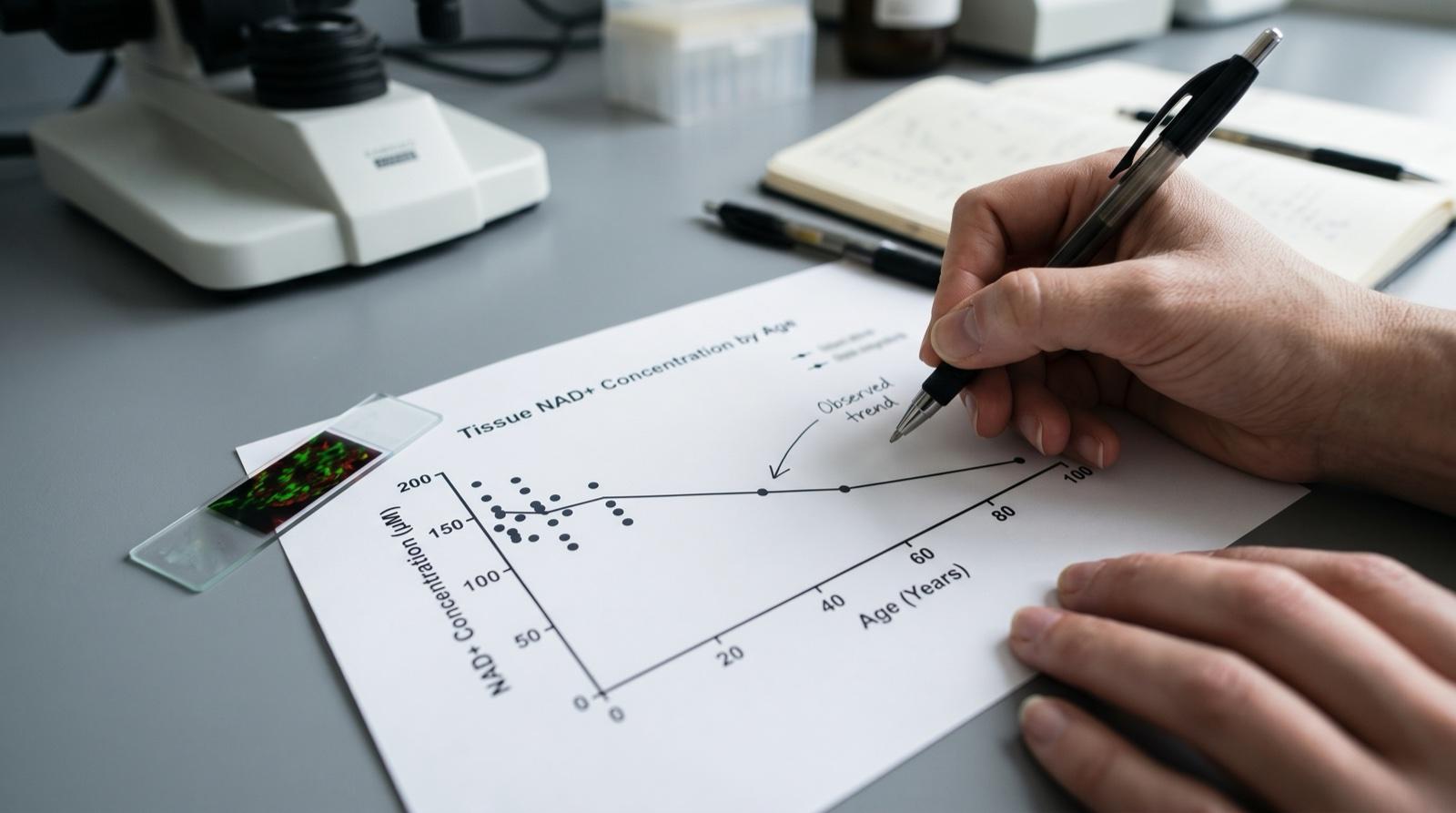
First, total NAD declines. Multiple human tissue surveys show falling NAD with age in skin, skeletal muscle, brain, and liver. Massudi et al. (2012, PMID 22724911) measured a roughly 50% decline in skin NAD between ages 20 and 60. Other tissues show gentler or more variable declines depending on the cohort and assay.
Second, the NAD+/NADH ratio shifts toward the reduced state. Zhu and colleagues (2015, PMID 25787987) used 31P magnetic resonance spectroscopy on human occipital cortex to compare 21 healthy younger (21-40) and 12 healthy older (41-68) adults. The older group showed a ~10-15% lower cytosolic NAD+/NADH ratio and a modestly lower total NAD pool. Mouse skeletal muscle and liver show analogous ratio shifts in older animals.
These two changes compound. Falling total NAD means less raw material for the system. A shift toward NADH means more of what remains is in the wrong form for sirtuin catalysis. The net signaling consequence is larger than either change alone would predict.
Interventions that raise NAD+ availability — endurance exercise, caloric restriction, time-restricted eating, and NR or NMN supplementation — push on this system from different directions. Exercise and fasting also shift the NAD+/NADH ratio toward the oxidized state by increasing electron transport chain throughput (which regenerates NAD+ from NADH). Precursors feed the salvage pathway and raise the total NAD pool, with NAD+ as the entry-point form.
Why direct NADH supplementation is not the longevity answer
NADH is sold as a supplement, usually marketed for energy or cognitive support. From a longevity-mechanism standpoint there are four reasons to be skeptical of NADH as a substitute for NAD+ precursors:
- Sirtuins do not use NADH. Every NAD+-consuming signaling enzyme — sirtuins, PARPs, CD38 — uses the oxidized form. Raising NADH does not feed any of them.
- Raising NADH shifts the ratio the wrong way. If the goal is more sirtuin activity, the goal is a higher NAD+/NADH ratio. Loading the cell with NADH lowers the ratio.
- Oral bioavailability is poor. NADH is unstable in stomach acid and is largely degraded before reaching systemic circulation. The few studies showing absorption use stabilized formulations and modest serum changes.
- Cellular uptake is limited. NAD+ and NADH do not cross cell membranes intact. Both forms have to be degraded extracellularly (by CD38 and CD73) and reabsorbed as precursors like nicotinamide riboside or nicotinamide. The cellular rebuilding step then enters the salvage pathway as NAD+, not NADH.
NADH supplementation is reasonable to investigate for specific symptomatic indications (chronic fatigue protocols, Parkinson's adjunctive use in some clinics), but it is not mechanistically a sirtuin or NAD+ longevity intervention. For NAD+-pool elevation, precursors like NR, NMN, and niacin are the evidence-aligned options.
Compartmentalization: cytosol, mitochondria, nucleus
A subtlety that matters for interpreting the literature: NAD+ does not exist as a single uniform pool. The cell maintains partly-separate compartments with their own NAD+/NADH ratios and their own enzymatic machinery.
Cytosolic NAD pool
The cytoplasm holds the most oxidized NAD pool, with ratios near 700:1. Cytosolic NAD+ feeds glycolysis (at the glyceraldehyde-3-phosphate dehydrogenase step), and cytosolic NADH is reoxidized either by lactate dehydrogenase under anaerobic conditions or by the malate-aspartate shuttle under aerobic conditions. Cytosolic sirtuins (parts of SIRT1's pool, SIRT2) and PARPs draw on this pool.
Mitochondrial NAD pool
The mitochondrial matrix runs much more reduced, with ratios near 7-10:1. The matrix pool is loaded by the TCA cycle and drained by Complex I of the electron transport chain. SIRT3, SIRT4, and SIRT5 work inside this compartment. Several lines of evidence suggest mitochondrial NAD+ declines independently of cytosolic NAD+ with age — and the mitochondrial decline may be the more functionally consequential one for energy metabolism.
Nuclear NAD pool
The nucleus does not have an independent NAD+ synthesis machinery — it shares the cytosolic pool through nuclear pore diffusion. Functionally, though, nuclear NAD+ is heavily consumed by PARP1 during DNA damage response and by chromatin-associated SIRT1, SIRT6, and SIRT7. In conditions of chronic DNA damage (aging, chronic inflammation, certain cancers), nuclear NAD+ can drop locally below what cytosolic measurements would suggest.
This compartmentalization is why blood NAD+ measurements should be interpreted carefully. Blood NAD+ tracks systemic precursor availability and erythrocyte turnover but does not directly report the tissue or subcellular pool that sirtuins are reading. Our companion piece on NAD+ blood testing walks through what those measurements do and do not tell you.
How labs differentiate NAD+ from NADH
Distinguishing NAD+ from NADH analytically is harder than measuring total NAD. Three main approaches are used in research and clinical labs:
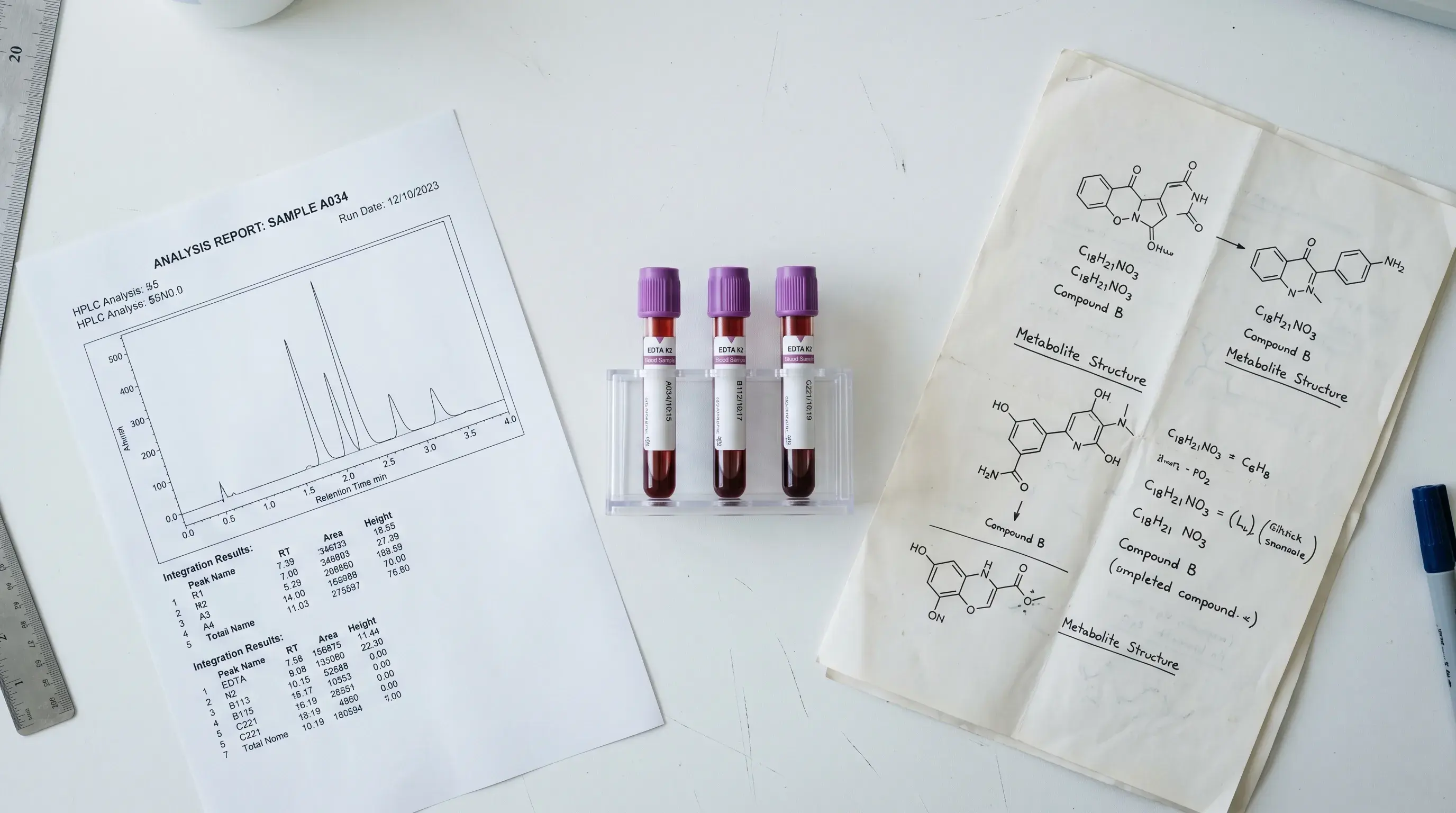
- Enzymatic cycling with acid/base extraction. A tissue sample is split. One aliquot is extracted under acid conditions, which destroys NADH but preserves NAD+; the other under base, which destroys NAD+ but preserves NADH. Each extract is then quantified with a cycling assay that uses alcohol dehydrogenase or another dehydrogenase to drive a colorimetric or fluorometric readout. Subtraction gives both species. This is the standard biochemistry-lab method.
- LC-MS/MS targeted metabolomics. Both species are quantified directly by mass spectrometry against isotope internal standards. This is the most accurate method for tissue lysates but requires rapid sample preparation to prevent ex vivo NAD+ to NADH interconversion.
- 31P-MRS in vivo. Phosphorus-31 magnetic resonance spectroscopy detects intact NAD+ and NADH non-invasively in human brain, muscle, and liver. The Lu/Bogner methodology (extended by Zhu et al.) extracts both peaks from the in vivo spectrum and computes a ratio without biopsy.
Commercial direct-to-consumer NAD+ blood tests almost universally measure either total NAD or NAD+ alone. They do not provide a NAD+/NADH ratio. The lack of ratio data is one of the practical limits of consumer testing today — the metric that most directly reflects sirtuin substrate availability is the metric these tests rarely return.
Quick reference: NAD+ vs NADH side by side
A compact table for the differences that matter most when reading NAD+ research:
| Property | NAD+ (oxidized) | NADH (reduced) |
|---|---|---|
| Chemistry | Pyridinium ring with +1 charge at N | Dihydropyridine ring; carries H- at C4 |
| Role | Hydride acceptor; signaling co-substrate | Hydride donor; electron carrier to ETC |
| Used by sirtuins? | Yes (consumed in deacylation) | No |
| Used by PARPs? | Yes (consumed in poly-ADP-ribosylation) | No |
| Used by CD38? | Yes (hydrolyzed) | No (CD38 acts on NAD+ much more than NADH) |
| Feeds Complex I? | No (Complex I regenerates NAD+ from NADH) | Yes (delivers electrons for ATP synthesis) |
| Typical cytosolic level | High (free pool dominant) | Low (free pool minor) |
| Typical mitochondrial level | Moderate | Higher than cytosolic NADH |
| Free cytosolic ratio (young liver) | ~700:1 favoring NAD+ (Williamson 1967) | |
| Free mitochondrial ratio (young liver) | ~7-10:1 favoring NAD+ (Williamson 1967) | |
Exercise, fasting, and the redox ratio
Two everyday interventions move the NAD+/NADH ratio toward the oxidized state without any supplementation:
Endurance exercise accelerates flux through the electron transport chain, regenerating NAD+ from NADH at Complex I faster than baseline. White and Schenk (2012, PMID 22550068) reviewed how exercise raises skeletal muscle NAD+ and shifts the NAD+/NADH ratio in trained muscle. Our companion piece on exercise and NAD+ levels walks through the human trial data on training-induced NAD+ changes.
Fasting and caloric restriction push the cell toward fatty acid oxidation, which generates NADH inside mitochondria but is balanced by upregulated mitochondrial biogenesis and electron transport chain capacity. The net effect in liver and muscle is a higher NAD+/NADH ratio in fed-state versus fasted-state comparisons. Caloric restriction also raises NAMPT expression and increases the total NAD pool.
Pharmacological interventions that raise NAD+ precursor availability (NR, NMN, niacin) primarily raise total NAD by feeding the salvage pathway. Whether they also shift the NAD+/NADH ratio is less directly studied — but mechanistically, an enlarged NAD pool that the cell is no longer rationing should permit a higher steady-state NAD+ fraction at the same ETC flux.
Open questions worth following
The NAD+/NADH ratio is one of the active research fronts in NAD+ biology. Several threads will shape the next few years of work:
- Compartment-specific ratio measurement in humans. Current 31P-MRS techniques resolve cytosolic and mitochondrial pools imperfectly. Next-generation imaging may allow direct tracking of how each compartment changes with age, exercise, and intervention.
- Genetically encoded ratio sensors. Cambronne and Kraus (2020, PMID 32246987) reviewed fluorescent NAD+/NADH ratio sensors that work in live cells. As these mature for in vivo work in tissue explants and animal models, the field will be able to watch the ratio change in real time rather than measure it at a single time point.
- Therapeutic ratio targeting versus pool targeting. Most current interventions raise total NAD and assume the ratio will improve. Interventions that specifically target the ratio (mitochondrial uncouplers in small doses, NADH oxidation catalysts, alternative electron acceptors) are early-stage but mechanistically distinct.
- Disease-specific ratio biology. Beyond aging, the NAD+/NADH ratio is dysregulated in metabolic syndrome (more reduced), in some cancers (more reduced from Warburg metabolism), and in heart failure (more reduced from ETC dysfunction). Each condition is a more targeted test of whether ratio restoration produces clinical benefit.
Bottom line
NAD+ and NADH are not competing supplements. They are the two states of one molecule that the cell flips between hundreds of times a second to run metabolism. Their absolute levels matter, but the ratio matters more — because the enzymes that drive aging biology (sirtuins, PARPs, CD38) consume NAD+ specifically and ignore NADH.
Aging shifts the system in two compounding directions: lower total NAD and a lower NAD+/NADH ratio. Both reduce free NAD+ available for sirtuin catalysis. The interventions with the strongest human evidence — exercise, caloric restriction, NAD+ precursor supplementation — push back on this in different ways. NAD+ precursors raise the total pool with NAD+ as the entry-point form; endurance training and fasting shift the ratio toward the oxidized state by accelerating electron transport chain throughput.
For practical purposes, “supplement NAD+, not NADH” is the simplest accurate framing. The precursor pathway feeds the signaling-relevant pool. Direct NADH supplementation feeds the wrong half of the redox pair and is not mechanistically aligned with NAD+ longevity goals.
Frequently asked questions
- What's the difference between NAD+ and NADH?
- NAD+ and NADH are the two forms of the same molecule in a redox pair. NAD+ is the oxidized form — it accepts two electrons (as a hydride, H-) during metabolism. NADH is the reduced form — it carries those electrons until they are passed to the mitochondrial electron transport chain or other acceptors. Chemically, NADH equals NAD+ plus one H- (a proton and two electrons). The plus sign on NAD+ refers to the positive charge on the nicotinamide ring's pyridinium nitrogen, not on the overall molecule.
- Why does the NAD+/NADH ratio matter more than absolute levels?
- Most NAD+-consuming enzymes — sirtuins, PARPs, CD38 — use NAD+ as a co-substrate, not NADH. So the pool that matters for signaling is specifically the NAD+ fraction. The cell can hold a constant total NAD pool while shifting the NAD+/NADH ratio dramatically depending on metabolic state. In healthy young cytosol the ratio sits around 700:1, meaning NAD+ vastly outnumbers NADH and substrate availability for sirtuins is high. In aged or stressed cells the ratio falls, sirtuins slow down, and downstream programs change even if total NAD looks similar on a mass-spec readout.
- Is NADH better than NAD+ as a supplement?
- For longevity-focused goals, no — and direct NADH supplementation is generally not recommended. NAD+ precursors like nicotinamide riboside (NR), nicotinamide mononucleotide (NMN), and niacin feed the cellular NAD+ salvage pathway and raise the NAD+ pool that sirtuins consume. Oral NADH has very poor stability and oral bioavailability, and even if absorbed, raising NADH would shift the redox ratio toward the reduced state — the opposite of what sirtuin activation requires. Most clinical NAD+ research uses precursors that elevate NAD+, not NADH.
- What is the typical NAD+/NADH ratio in cells?
- Williamson et al. (1967, PMID 4382091) established the foundational measurements: cytosolic free NAD+/NADH ratios in liver typically sit around 700:1 (favoring NAD+), while mitochondrial matrix ratios sit around 7-10:1 (a much more reduced pool). The reason for the difference is compartmentalization — the cytosol runs lactate dehydrogenase and other dehydrogenases that regenerate NAD+, while the mitochondrial matrix is constantly being loaded with reducing equivalents from the TCA cycle that get passed to the electron transport chain.
- How does the NAD+/NADH ratio change with age?
- Several studies show a shift toward the reduced state with age. Zhu et al. (2015, PMID 25787987) used 31P magnetic resonance spectroscopy in human brain and reported a roughly 10-15% decline in the cytosolic NAD+/NADH ratio between young (21-40 years) and older (40-68 years) adults. Mouse skeletal muscle and liver show similar age-related shifts. Whether these changes are cause, consequence, or epiphenomenon of aging biology is still debated — but they consistently correlate with declining sirtuin output and mitochondrial efficiency.
- What is a hydride transfer?
- A hydride is a proton plus two electrons (H-). When a substrate gets oxidized — for example, lactate becoming pyruvate — it loses two electrons and a proton. NAD+ accepts this hydride at the C4 position of its nicotinamide ring, becoming NADH. The reaction is reversible: NADH can hand the hydride back to a different acceptor. This single chemical move — hydride transfer to and from NAD+ — is the dominant electron-shuttle mechanism in central metabolism, used by hundreds of dehydrogenase enzymes.
- Do labs measure NAD+ and NADH separately?
- Yes, and the methodology matters. Total NAD (NAD+ + NADH) is the easiest measurement — colorimetric or fluorometric cycling assays return a combined value. Separating them requires either enzymatic cycling with acid/base extraction (which selectively destroys one form), LC-MS/MS quantitation of intact species, or 31P-MRS for in vivo work. Commercial NAD blood tests almost always measure total NAD or NAD+ specifically and do not provide a ratio. Research-grade labs use mass spectrometry on tissue biopsies to get true compartment-resolved ratios.