Exercise vs NAD+ Precursors: How Training Raises NAD+
Aerobic and resistance training raise cellular NAD+ via NAMPT upregulation and mitochondrial biogenesis. Here is what human exercise trial data shows.

Exercise raises cellular NAD+ levels — but through a different pathway than oral precursors. Aerobic training upregulates NAMPT in working muscle, drives mitochondrial biogenesis, and partially restores the age-related fall in tissue NAD+ that supplements address from the supply side. The two interventions are complementary, not redundant.
Why does exercise raise NAD+?
Skeletal muscle is metabolically expensive. A working muscle fiber burns ATP at rates that can exceed resting metabolism by 100-fold during sustained contraction, and every ATP regenerated through oxidative phosphorylation requires NAD+ as the electron carrier in the TCA cycle and electron transport chain. The cell's response to repeated demand is to scale up the supply system — and the rate-limiting enzyme of that supply system is NAMPT.
The mechanistic chain is well-mapped. Mechanical loading and energetic stress activate AMPK and SIRT1 signaling. AMPK phosphorylates PGC-1α, the master regulator of mitochondrial biogenesis. PGC-1α then coordinately upregulates NAMPT expression, mitochondrial protein synthesis, and oxidative enzyme content. The result is a fiber that carries more NAD+, has more mitochondria to use it, and runs the salvage pathway faster — a positive-feedback cycle that compounds with consistent training.
Brandauer et al. (2013, PMID 23420876) demonstrated this directly: AMPK activation in mouse muscle increases NAMPT protein and elevates muscle NAD+, and AMPK-knockout mice fail to mount the NAD+ response to exercise. The signaling cascade is conserved in humans. This is why the exercise-NAD+ relationship sits on stronger mechanistic ground than most longevity interventions — it is not correlation, it is a defined kinase pathway with knockout validation.
What do human exercise NAD+ trials show?
The clearest single human dataset is Costford et al. (2018, PMID 29572252). The investigators biopsied vastus lateralis muscle in sedentary and endurance-trained subjects and measured NAMPT protein directly. Trained subjects carried roughly 25-30% more NAMPT protein at baseline. NAD+ levels tracked with NAMPT — higher salvage capacity, higher steady-state pool. This is a cross-sectional finding, but the gradient is consistent with training as the cause rather than selection.
Acute response data comes from De Guia et al. (2019, PMID 31313625). Subjects performed a single bout of aerobic exercise; muscle biopsies taken 1-3 hours post-session showed transient NAMPT mRNA elevation and increased NAD+ recovery from baseline. The acute response is short and sharp; the chronic adaptation is what compounds.
Janssens et al. (2022, PMID 35289358) extended this picture to humans across exercise intensities, showing NAMPT and SIRT1 transcriptional responses scale with workload. High-intensity interval protocols produced the largest per-minute response, though the absolute response depended on total work performed. Volume matters; intensity provides leverage.
NAMPT and NAD+ in trained vs sedentary muscle
Exercise vs NAD+ precursors: which raises NAD+ more?
The honest answer is that they raise different NAD+ pools. Oral NR and NMN elevate whole-blood NAD+ by 30-60% within weeks across multiple human trials. Trammell et al. (2016, PMID 27725663) established the canonical pharmacokinetic profile for NR. Martens et al. (2018) and Yoshino et al. (2021) confirmed durable systemic elevation. These are large, fast, well-characterized effects on circulating NAD+.
Exercise raises NAD+ predominantly in the working tissue. The systemic effect on circulating NAD+ is smaller — single-digit to low-double-digit percentages — and harder to detect with standard blood-based assays. What exercise does provide that precursors generally do not: durable upregulation of the salvage machinery itself, mitochondrial biogenesis, and improved oxidative capacity in the tissues that consume NAD+ during oxidative phosphorylation.
Costford et al. (2018) put it cleanly: trained muscle does not just have more NAD+, it has more capacity to make NAD+. That structural change is what oral precursors cannot directly produce. Conversely, exercise cannot produce the rapid 30-60% systemic elevation that an oral 1 g/day NR protocol delivers in three weeks. Different tools, different jobs.
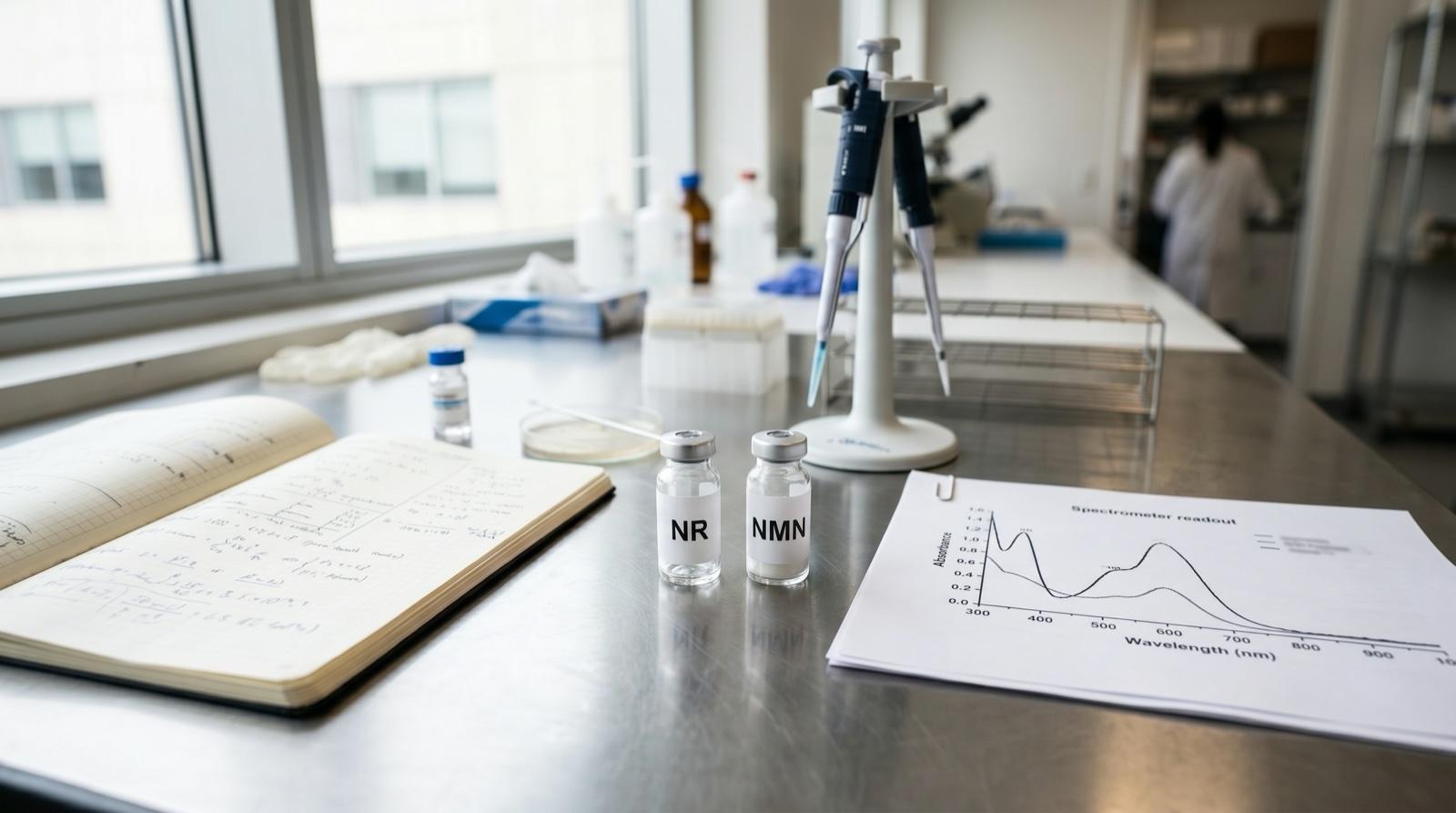
Side-by-side: training vs precursor supplementation
The two interventions sit on different axes of the NAD+ system. The comparison below summarizes how they differ on speed, location, and durability of effect.
- Speed of NAD+ rise: NR/NMN reach measurable plasma NAD+ elevation in days; exercise NAMPT adaptation requires weeks of consistent training to stabilize.
- Location of effect: Precursors elevate systemic (blood, liver, broadly distributed); exercise elevates predominantly in working skeletal muscle and, secondarily, cardiac muscle.
- Mechanism of elevation: Precursors push substrate into the salvage pathway from outside; exercise upregulates the salvage pathway machinery itself via AMPK, SIRT1, and PGC-1α signaling.
- Mitochondrial biogenesis: Strong with exercise via PGC-1α; modest or context-dependent with precursors alone.
- Durability after stopping: Plasma NAD+ from precursors falls back toward baseline within 1-2 weeks of cessation; training adaptations decline over weeks but baseline NAMPT protein decays slowly compared to plasma half-life of supplements.
- Off-target effects: Exercise carries broad cardiovascular, cognitive, and metabolic benefits independent of NAD+; precursors are narrowly metabolic in their established benefits.
Does exercise still raise NAD+ in older adults?
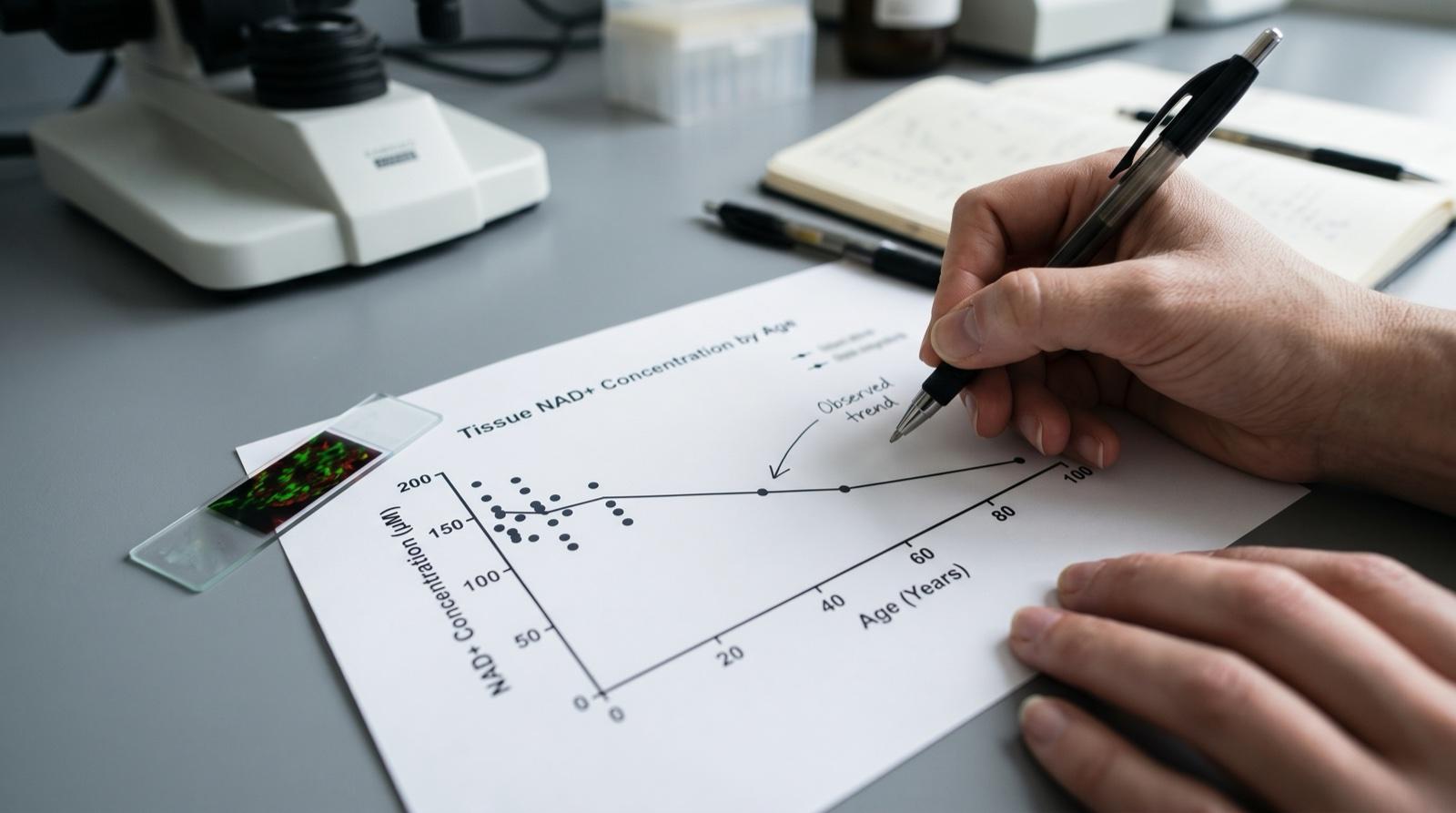
Aging blunts the exercise-NAD+ response without abolishing it. The same training stimulus that drives a 25-30% NAMPT upregulation in young adults produces a smaller absolute response in older subjects, partly because baseline NAMPT is already reduced and partly because CD38 hydrolysis rises with age and consumes NAD+ faster. The system has both lower supply capacity and higher demand pressure.
Kane and Sinclair (2019) and follow-up work argued this is exactly the scenario where combining precursors and exercise becomes most defensible. Precursor supplementation supplies substrate to a salvage pathway that has reduced enzymatic capacity; exercise rebuilds that capacity over weeks. Neither alone restores young-adult NAD+ kinetics, but the combination targets both halves of the deficit.
Janssens et al. (2022, PMID 35289358) reported that high-intensity interval training in middle-aged and older adults still produced measurable mitochondrial and NAMPT responses. Volume tolerated drops with age, but per-unit response to intensity remains substantial. This is part of why HIIT and Zone 2 protocols both feature prominently in the longevity-training literature — they are dose-efficient stimuli for the same underlying pathway.
Age trajectory: muscle NAD+ in sedentary vs trained cohorts
Which type of exercise raises NAD+ the most?
Aerobic endurance training has the strongest evidence base. Long steady-state and Zone 2 work drive the AMPK–PGC-1α–NAMPT axis through sustained energetic demand without the mechanical destruction of heavy resistance training. Most of the quantified human NAMPT data (Costford, De Guia, Janssens cohorts) sits in the moderate-to-vigorous aerobic range.
High-intensity interval training appears to be efficient per minute of training time. Janssens et al. (2022, PMID 35289358) documented robust AMPK and SIRT1 transcriptional responses at the upper intensity end. For people who are time-limited but health-able, HIIT delivers a strong per-minute stimulus to the same pathway.
Resistance training has thinner evidence specifically for NAMPT and NAD+ but a strong case from adjacent biology. Heavy loading activates SIRT1 and AMPK transiently, drives satellite cell activation, and improves muscle quality. The likely effect on NAD+ is real but secondary to its primary signaling outputs (mTOR, hypertrophy pathways). It also adds the metabolic mass — more muscle means more NAD+-using tissue at rest.
- Zone 2 / aerobic base (3-4 sessions/week, 30-60 min): Best-evidenced stimulus for NAMPT and mitochondrial biogenesis; sustainable across decades.
- HIIT (1-2 sessions/week, 15-25 min): Strong per-minute response on AMPK, SIRT1, and oxidative enzyme content.
- Resistance training (2-3 sessions/week): Indirect NAD+ benefit via tissue mass and signaling overlap; primary value is muscle quality and insulin sensitivity.
How should training and NAD+ precursors be combined?
The strongest direct human evidence for combination comes from the Brakedal et al. (2022, PMID 35235774) NR-Park trial. Subjects with early Parkinson's disease received 1 g/day NR over 30 days and showed both elevated brain NAD+ on 31P-MRS and improved exercise capacity metrics on standard motor and cardiopulmonary measures. The trial does not isolate NR from background activity — it tests the combination — but the outcome is compatible with substrate elevation amplifying training adaptation rather than substituting for it.
Mechanistically the combination is intuitive. NR raises systemic substrate availability for the salvage pathway. Exercise drives the adaptive response of the salvage machinery itself and the mitochondrial infrastructure that uses NAD+. Substrate without machinery is capped; machinery without substrate is starved. Both together is the configuration the system evolved for — physical activity in a well-fed organism.
For dosing, the human trials with the most exercise-relevant physiology used 1 g/day NR (Martens 2018, Brakedal 2022) or 250 mg/day NMN (Yoshino 2021). Detailed dose-response considerations live in our NMN dosage trial review and the broader NR vs NMN comparison. Timing relative to training does not appear to matter — peak plasma is reached within hours but the steady-state NAD+ pool turns over on a multi-day clock.
Where the stack's NAD+ comes from
What exercise does not do for NAD+
Exercise is not a substitute for measuring. People sometimes assume regular training pushes NAD+ into a young-adult range and that supplementation is therefore unnecessary. The cross-sectional data argues against this assumption — even endurance-trained masters athletes show lower muscle NAD+ than young sedentary controls in some cohorts. Training slows the decline; it does not reverse the underlying age-related shift in CD38 expression and chronic PARP activation.
Exercise also does not directly address the CD38 leak. Camacho-Pereira et al. (2016, PMID 27304499) established CD38 as the dominant NADase in aged tissue, and CD38 expression is driven primarily by chronic inflammation (NLRP3, senescence-associated secretory phenotype). Exercise has anti-inflammatory effects that probably reduce CD38 indirectly, but the direct CD38-inhibitor literature is a separate intervention class — explored in our CD38 inhibitor review.
Finally, training does not produce the rapid systemic NAD+ elevation that some clinical applications require. Acute illness, severe deficiency, neurodegenerative protocols, and short-window perioperative contexts where elevated NAD+ is the goal use IV NAD+ or oral precursor loading. Exercise is a long-game intervention; precursors and IV are short-game interventions. Recognizing the time scale clarifies which tool fits which problem.
How would you actually measure exercise's effect on your NAD+?
Measurement is harder than headlines suggest. Whole-blood NAD+ assays (the most accessible commercial options) show meaningful variability within-subject across days and respond to acute exercise modestly compared to oral precursor protocols. Single time points without controlled conditions can mislead. Our guide on measuring NAD+ via blood test unpacks what commercial assays capture and what they miss.
Tissue measurement — the gold standard for the exercise question — is not realistically available outside of research settings. Skeletal muscle biopsies under research protocol use established LC-MS or HPLC methods (Demarest et al. 2019, PMID 31506599 set the methodological bar). For non-research use, indirect markers — VO2max trend, lactate threshold, recovery capacity, sleep depth — are imperfect but track the same underlying mitochondrial adaptations training drives through the NAD+ axis.
Bottom line
Exercise raises NAD+ through a mechanistically distinct pathway from oral precursors. Training upregulates NAMPT salvage capacity in working muscle, drives mitochondrial biogenesis through PGC-1α, and partially offsets the age-related decline that CD38 hydrolysis drives. Precursors supply substrate; exercise builds machinery.
The two interventions sit on different axes of the same system. The Brakedal et al. (2022) trial supports stacking rather than substitution. For practical guidance: 150 minutes of moderate-to-vigorous activity per week with 2-3 resistance sessions matches both the public health guideline and the dose that consistently appears in the exercise-NAD+ literature. Layering precursor supplementation on top is defensible when CD38 leak and reduced NAMPT capacity dominate — primarily in adults over 50 with sedentary baselines or specific clinical indications.
Anyone evaluating supplementation should hold both interventions to the same standard the rest of NADFaq uses — named PMIDs, evidence grading, and a clear distinction between blood NAD+ as a biomarker and meaningful clinical outcomes. Training has decades of healthspan evidence beyond NAD+; precursors have short-horizon mechanistic evidence with longer-horizon outcome data still maturing. Conservative framing respects the asymmetry.
Frequently asked questions
- Does exercise actually raise cellular NAD+?
- Yes, in skeletal muscle the evidence is strong. De Guia et al. (2019, PMID 31313625) showed acute aerobic exercise upregulates NAMPT expression and increases muscle NAD+ in humans within hours of a session. Costford et al. (2018, PMID 29572252) documented chronic endurance training raises baseline muscle NAMPT protein levels by roughly 25-30% in trained vs sedentary cohorts. Whole-blood NAD+ responses to exercise are smaller and more variable than tissue measurements.
- Is exercise as effective as NAD+ precursor supplementation?
- They work through different mechanisms and are not interchangeable. Oral NR or NMN raises systemic NAD+ pools by 30-60% within weeks (Trammell 2016, PMID 27725663; Yoshino 2021). Exercise raises tissue-specific NAD+ primarily in working muscle through NAMPT salvage upregulation, with smaller systemic effect. The Brakedal et al. (2022, PMID 35235774) NR-exercise trial in Parkinson's disease found NR augmented exercise capacity gains, suggesting the two interventions are complementary rather than redundant.
- What type of exercise raises NAD+ the most?
- Aerobic endurance training has the strongest evidence for NAMPT and mitochondrial biogenesis induction. High-intensity interval training (HIIT) appears particularly effective per minute of training (Janssens et al. 2022, PMID 35289358). Resistance training evidence is thinner but emerging — it likely contributes through different signaling (mTOR, satellite cell activation) with secondary NAD+ effects. The dose that consistently shows up in exercise-NAD+ literature is 150 minutes of moderate-to-vigorous activity per week.
- How quickly does NAD+ rise after exercise?
- Acute single-session effects on NAMPT mRNA appear within 1-3 hours post-exercise. Measurable muscle NAD+ elevation has been documented within 24 hours in trained subjects. Chronic adaptations (higher baseline NAMPT protein, sustained mitochondrial biogenesis) require weeks of consistent training — most exercise NAD+ trials use 8-12 week protocols to capture stable adaptation.
- Does exercise raise NAD+ in older adults?
- Yes, though the response is often blunted compared to young adults. Lamb et al. (2020) and follow-up work in masters athletes show resistance and endurance training partially restore the age-related decline in skeletal muscle NAD+ and mitochondrial function. The blunted response argues for combining exercise with precursor supplementation in older cohorts where NAMPT salvage capacity is reduced — a hypothesis the Brakedal Parkinson's trial supports indirectly.
- Should I take NAD+ precursors before or after a workout?
- Human pharmacokinetic data does not support a specific timing window for ergogenic benefit. NR and NMN reach peak plasma concentrations within 1-4 hours and elevate NAD+ pools over a multi-day window. The Brakedal trial dosed NR daily without a workout-window protocol and still saw exercise-capacity benefit. Practical guidance: take precursors at a time you will remember and adhere to consistently. Adherence drives outcome more than timing.