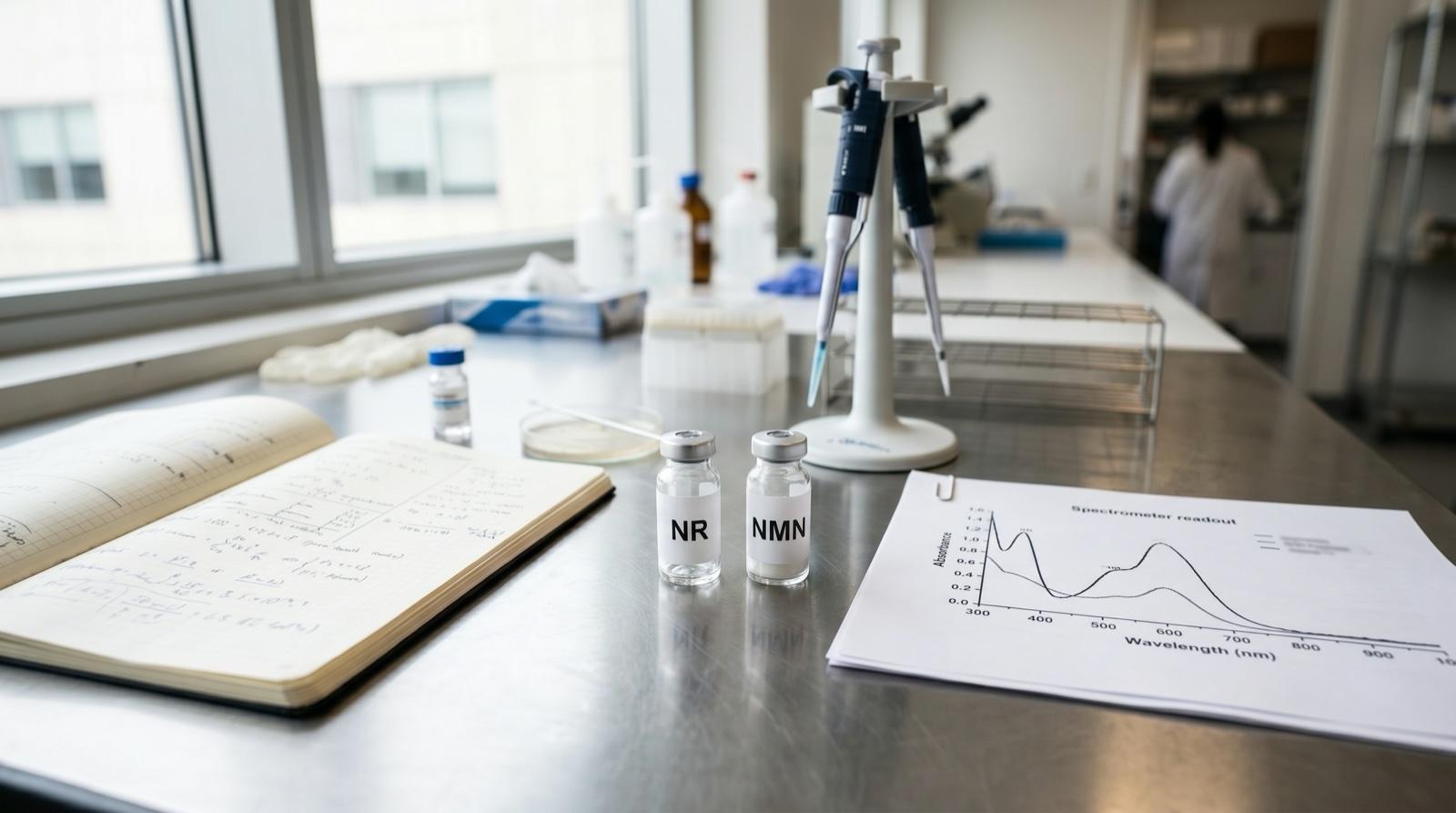
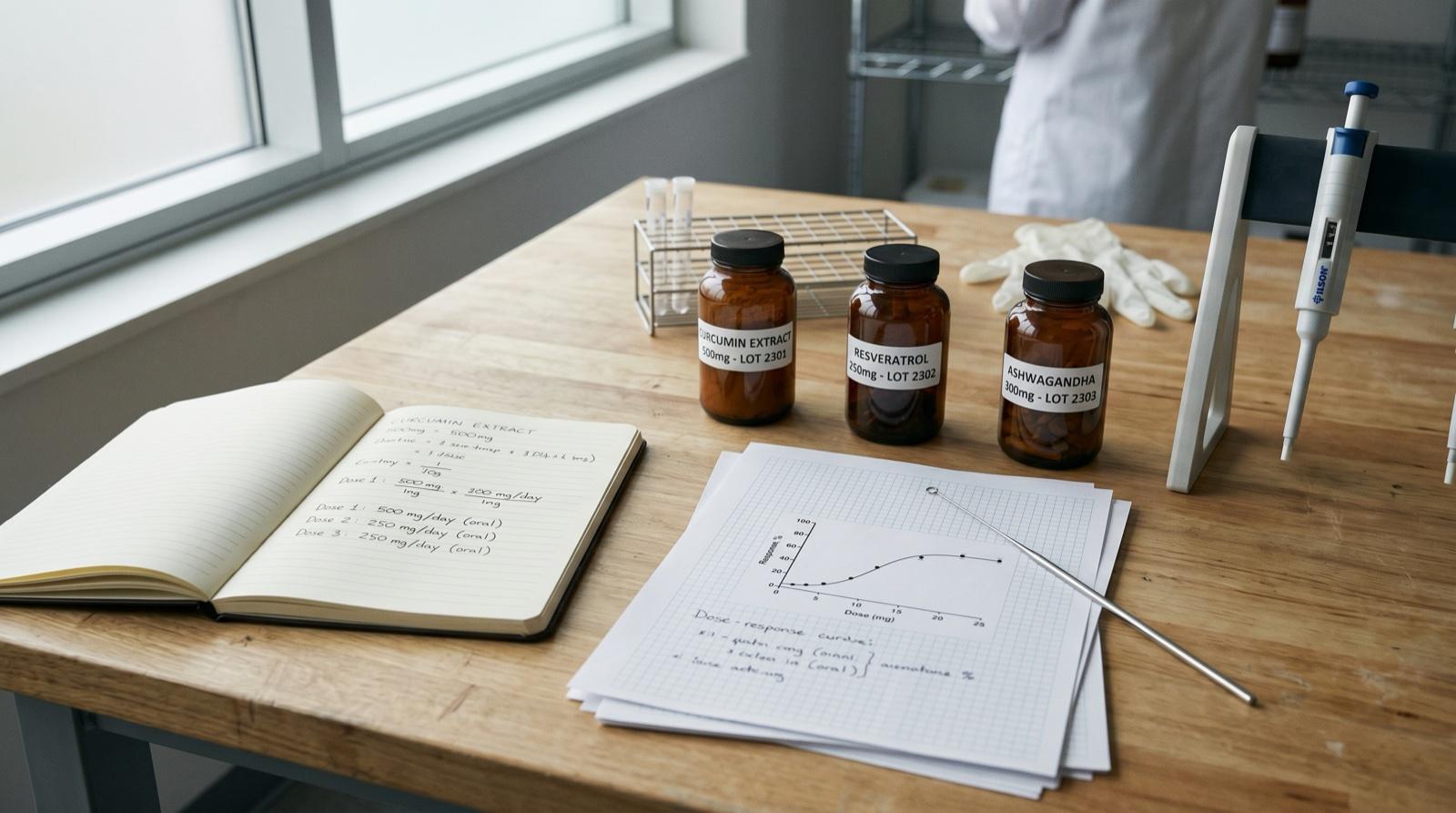
Sublingual vs Oral NMN: What the Pharmacokinetic Data Shows
Sublingual vs oral NMN bioavailability: published human PK data is sparse, and '5-10x absorption' marketing claims lack head-to-head human trials.
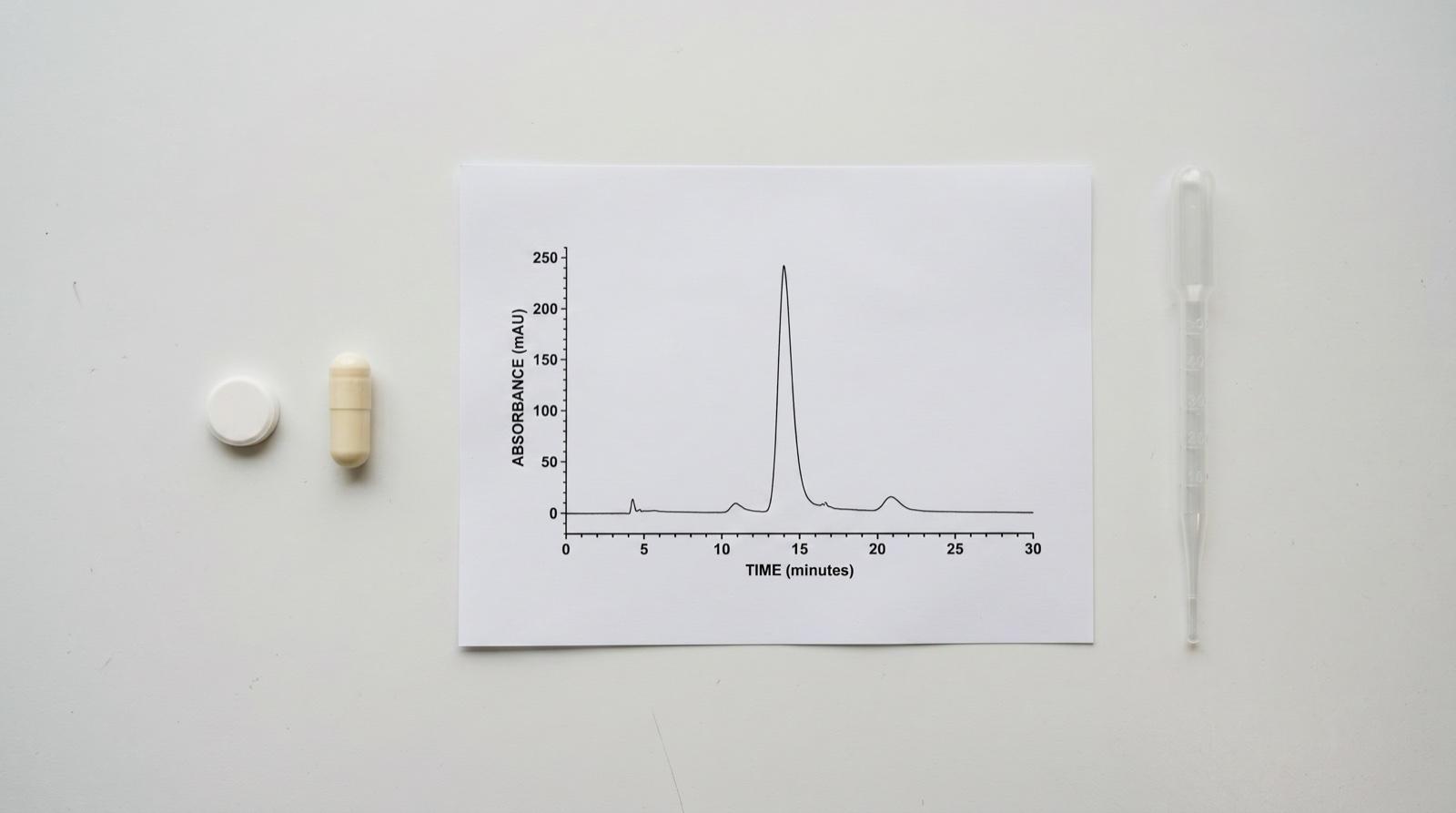
The claim that sublingual NMN is absorbed 5 to 10 times better than oral NMN is a marketing conclusion drawn from rodent data, in-silico modeling, and pharmacological theory — not from published human head-to-head pharmacokinetic trials. The theoretical case for sublingual bypass is real. The comparative human evidence is not where the advertising suggests it is.
Why does sublingual delivery get promoted in the first place?
The pharmacological rationale rests on first-pass metabolism. When you swallow a compound, it travels through the stomach and small intestine, then drains into the hepatic portal vein and passes through the liver before reaching systemic circulation. The liver strips out or chemically alters a large fraction of many small molecules on that first pass. For some drugs — nitroglycerin is the canonical example — oral bioavailability is near zero for exactly this reason, and sublingual or buccal administration is the only practical route.
NMN sits on this spectrum somewhere. Intestinal alkaline phosphatase dephosphorylates NMN to nicotinamide riboside in the gut lumen, and further breakdown to nicotinamide happens in enterocytes and hepatocytes. Ratajczak et al. (2016, Nature Communications) characterized this extensive gut metabolism in mice. The fraction of intact NMN that actually reaches peripheral blood after an oral dose is — in rodent models — modest. Sublingual supplement vendors translate that observation into the claim that bypassing the gut would dramatically increase systemic NMN exposure.
Sublingual vs oral NMN: side-by-side comparison
The two routes differ less in proven outcomes than the marketing implies. The table below summarizes what is actually established versus what is extrapolated, drawing only on the published evidence discussed in this article.
| Factor | Sublingual NMN | Oral NMN (capsule) |
|---|---|---|
| Bypasses first-pass liver metabolism | In theory yes (oral mucosa drains to systemic circulation) | No (drains via hepatic portal vein) |
| Published human PK trial (Cmax/AUC/Tmax) | None indexed in peer-reviewed literature as of 2024 | Limited: Irie 2020, Yoshino 2021, Okabe 2022 |
| Demonstrated blood NAD+ elevation in humans | Not measured in a controlled published trial | Yes, dose-dependent across multiple small trials |
| Typical active dose per unit | ~50-125 mg per tablet | ~250-500 mg per capsule |
| Units to reach the 250 mg/day studied dose | Multiple tablets | One capsule |
| Relative cost per gram of active ingredient | Higher (small tablets, specialty excipients) | Lower |
| “5-10x absorption” marketing claim | Not supported by any published human head-to-head trial | |
What has actually been published on oral NMN pharmacokinetics in humans?
The human oral NMN literature is thin but not empty. Irie et al. (2020, Endocrine Journal, PMID: 31685720) gave single oral doses of 100, 250, and 500 mg NMN to ten healthy men and measured plasma NMN metabolites. They reported no serious adverse effects and detectable changes in downstream NAD+ metabolite pools. They did not, however, detect a large or sustained spike in intact plasma NMN — consistent with rapid conversion to downstream metabolites rather than circulation of the parent molecule.
Okabe et al. (2022, Endocrine Journal) extended this with chronic oral NMN at 250 mg/day for 12 weeks in healthy adults and reported elevated blood NAD+ alongside improved sleep and fatigue scores. Yoshino et al. (2021, Science, PMID: 33888596) dosed 250 mg/day for 10 weeks in postmenopausal women with prediabetes and reported improved muscle insulin sensitivity. Kim et al. (2022, Nutrients, PMID: 35889765) compiled the growing NMN clinical literature and emphasized the same gap: most trials measure NAD+ end-products rather than parent-compound plasma pharmacokinetics.
What has been published on sublingual NMN pharmacokinetics?
As of this writing, no peer-reviewed human randomized trial has published controlled pharmacokinetic data for sublingual NMN under a Cmax, AUC, and Tmax framework comparable to the oral studies above. Smaller observational reports and industry-sponsored white papers exist. Indexed, peer-reviewed head-to-head data of the kind that supports most pharmacology textbook claims about sublingual delivery does not.
This is the data gap the marketing claim obscures. Sublingual bypass of first-pass metabolism is a real phenomenon for many molecules — but demonstrating it for a specific molecule requires a specific study. For NMN in humans, that study has not been published. Until it is, commercial absorption claims are extrapolation, not measurement.
Why is the human sublingual PK data missing?
Three reasons converge. First, peer-reviewed pharmacokinetic work is expensive and requires clinical infrastructure most supplement companies do not fund. Second, NMN's regulatory status in the United States shifted in 2022 when the FDA excluded it from dietary supplement status pending NDIN review, dampening incentive for expensive comparative trials. Third, plasma NMN has a short half-life and requires specialized mass-spectrometry assays — a technical barrier that keeps the small existing literature concentrated in a handful of labs.
How does NR pharmacokinetic data compare?
NR pharmacokinetics are better characterized than NMN in humans. Trammell et al. (2016, Nature Communications, PMID: 27721479) conducted the first controlled single-dose NR pharmacokinetic study in healthy adults, measuring NR itself and downstream metabolites in plasma and urine with isotope-labeled tracers. Airhart et al. (2017, PLOS ONE, PMID: 29211728) extended this with multi-dose NR at 100, 300, and 1,000 mg/day for eight days, showing dose-dependent elevation of the NAD+ metabolome.
The combined NR literature supports a mechanistic picture: oral NR is partially broken down to nicotinamide in the gut but a meaningful fraction reaches systemic circulation and contributes to the NAD+ pool via the salvage pathway. NMN likely follows a similar logic, but the measurement density is much lower. Our NR vs NMN comparison lays out how these two compounds differ in regulatory history, human trial scope, and patent protection.
What is the Slc12a8 transporter debate?
A parallel thread complicates any PK discussion. Grozio et al. (2019, Nature Metabolism) reported that Slc12a8 is a dedicated NMN transporter in mouse small intestine, with knockdown abolishing NMN uptake. If accurate, that would mean NMN has a direct intestinal absorption route that bypasses the NR-to-NMN reconversion step entirely.
Schmidt and Brenner (2019, Nature Metabolism) published a direct critique arguing the Grozio team's methodology could not distinguish Slc12a8-mediated NMN uptake from bulk-phase uptake of radiolabel via other nicotinamide-route mechanisms. The dispute has not been resolved by subsequent human work, and reviews including Kim 2022 treat the transporter's existence in humans as an open question. The upshot for this discussion: even the oral absorption route for NMN is not fully mapped in humans, which makes confident claims about sublingual superiority even harder to sustain.
What can studies actually measure?
Three biomarkers dominate published NMN research, and they don't mean the same thing.
Plasma NMN
Intact NMN in plasma has a short half-life and low concentrations, making it technically difficult to quantify with confidence. Liu et al. (2018, Cell Metabolism, PMID: 30174302) used metabolomic flux analysis to map how labeled NAD+ precursors move through tissues in mice. Their key finding: most oral NAD+ precursors are rapidly degraded and reassembled, meaning plasma concentrations of the parent molecule are a poor proxy for biological effect. Elevated blood NAD+ is the more reliable signal.
Whole-blood NAD+ and NAD+ metabolites
This is the most commonly reported endpoint in human NMN and NR trials. Mitchell et al. (2022) and colleagues refined assays that measure NAD+ alongside NMN, NAM, NAR, MeNAM, and ADPR — the full NAD+ metabolome — in a single blood draw. This is what most modern trials mean by “NAD+ elevation.” It's a stronger biomarker than plasma NMN alone, but it still does not directly measure tissue NAD+ in organs where the action matters.
Tissue NAD+
The gold standard is a biopsy before and after dosing. This is rare in humans for obvious logistical reasons. Elhassan et al. (2019) took skeletal muscle biopsies before and after 21 days of NR at 1 g/day and showed elevation at the tissue level. No equivalent sublingual-NMN biopsy trial has been published. For most supplementation decisions, tissue NAD+ is inferred rather than measured.
Are there practical differences to acknowledge?
Stepping outside pharmacokinetics, the two routes differ in ways that matter for adherence. Sublingual tablets typically carry lower active doses per unit — 50 to 125 mg per tablet is common — because a tablet must dissolve in the mouth in a few minutes. Oral capsules routinely carry 250 to 500 mg per unit. Achieving the 250 mg/day dose used in Yoshino 2021 with sublingual units means multiple daily tablets versus a single capsule.
Cost per gram of active ingredient tends to be higher for sublingual formats due to smaller tablet sizes and specialty excipients that accelerate oral dissolution. Chronic daily dosing in the 250 to 900 mg range studied in published trials (Yamaguchi 2022 explored up to 900 mg/day) is more economical in capsule form. Our dosage protocols post summarizes what studied doses actually look like. None of this is a recommendation — dose selection is a clinician's call, not a blog's.
Where do IV and liposomal fit?
Other delivery routes come up often in the same conversation. IV NAD+ and IV precursor infusion guarantee 100% bioavailability by definition but require clinical administration and carry their own pharmacokinetic quirks — a large bolus clears rapidly as enzymes catch up. Active clinical trials continue to test IV protocols for specific indications. Liposomal encapsulation is pitched as a middle ground — oral administration with phospholipid carriers that protect the active compound from gut degradation. Human pharmacokinetic data on liposomal NMN is even thinner than sublingual.
The honest pattern across all of these: pharmacological theory points in directions that would favor delivery bypassing gut metabolism. Published human comparative data is sparse enough that confident ranking between routes is premature. The commercially aggressive claim — sublingual is dramatically better than oral — has the weakest empirical footing relative to how often it is asserted.
Bottom line: what the evidence will and will not support
Oral NMN at studied doses (250-500 mg/day) raises blood NAD+ metabolites in multiple small human trials. This is consistent across Irie 2020, Yoshino 2021, Okabe 2022, and the trials Kim 2022 compiles. Sublingual NMN likely does the same in principle, but no published human PK trial has measured it at comparable rigor. Pharmacological theory favors sublingual bypass; published comparative data does not confirm the specific “5 to 10x absorption” claims that appear on most sublingual product pages.
For anyone weighing the two routes: neither is clearly dominant based on published human evidence. Dose, formulation purity, adherence, and cost per studied equivalent are at least as relevant as the route itself. Blood NAD+ elevation is the measurable biomarker the trials actually report; everything downstream of that — including tissue response and clinical outcome — remains an active research question for both delivery routes.
Frequently asked questions
- Is sublingual NMN really better absorbed than oral NMN?
- No published head-to-head human pharmacokinetic trial supports the common marketing claim of 5 to 10 times higher absorption. The sublingual route bypasses first-pass liver metabolism on pharmacological principle, but controlled human comparisons measuring blood NMN or NAD+ after each route do not currently exist in the peer-reviewed literature.
- What does published oral NMN pharmacokinetic research show?
- Irie et al. (2020, Endocrine Journal, PMID: 31685720) gave single oral doses of 100 to 500 mg NMN and measured changes in NMN metabolites. Yoshino et al. (2021, Science, PMID: 33888596) dosed 250 mg/day for 10 weeks and reported improved muscle insulin sensitivity in prediabetic women. Both confirm systemic exposure but did not measure intact NMN at long time points.
- Does sublingual NMN skip first-pass metabolism?
- In theory, yes. Substances absorbed across the oral mucosa drain into the superior vena cava rather than the hepatic portal vein, bypassing first-pass liver metabolism. Whether NMN is actually absorbed intact across human oral mucosa at meaningful quantities has not been rigorously measured in published human trials.
- What is actually measurable in NMN research?
- Published studies track three biomarkers: plasma NMN (short half-life, difficult to detect), whole-blood NAD+ and NAD+ metabolites (the Mitchell et al. 2022 methodology), and tissue NAD+ via biopsy (rare in humans). Most commercial absorption claims rely on rodent or in-silico data, not human plasma pharmacokinetics.
- Why is NR pharmacokinetic data more complete than NMN?
- NR has been studied longer and with FDA GRAS status since 2015. Trammell et al. (2016, Nature Communications, PMID: 27721479) and Airhart et al. (2017, PLOS ONE, PMID: 29211728) characterized single- and multi-dose NR pharmacokinetics in humans with labeled metabolite tracking. NMN human pharmacokinetic work remains smaller in scope and sample size.