NAD+ and Parkinson's Disease: What NADPARK, NR-SAFE, and N-DOSE Trials Actually Found
Three Phase 1-2 trials tested NR in Parkinson's disease. NADPARK raised brain NAD+ measurably, motor benefit was modest, and Phase 3 evidence does not yet exist.

Current evidence on NAD+ and Parkinson's disease is preliminary. Three small Phase 1 to Phase 2 trials — NADPARK, NR-SAFE, and the ongoing N-DOSE — show that 1 g/day oral nicotinamide riboside (NR) raises brain NAD+ measurably and produces a modest motor-score improvement, but the clinical effect is small, the trials are short, and no Phase 3 evidence yet supports NR as a Parkinson's treatment. The biology is plausible; the disease-modification claim is not.
Why is NAD+ a target in Parkinson's disease?
Parkinson's disease is, at its biochemical core, a disease of mitochondrial failure in dopaminergic neurons of the substantia nigra pars compacta. The classic neurochemical signature — complex I deficiency, oxidative stress, alpha-synuclein aggregation, and progressive loss of dopaminergic projections — was first characterized in the 1980s after the discovery that the toxin MPTP produced parkinsonism in humans by selectively poisoning complex I of the mitochondrial electron transport chain (Langston et al., Science 1983, PMID 6823561).
NAD+ is the substrate that complex I requires to function. Every oxidative phosphorylation reaction in every mitochondrion in the brain depends on the NAD+/NADH redox couple to transfer electrons. When NAD+ falls — either through age-related declineor through the disease-driven mitochondrial stress that defines Parkinson's — complex I cannot operate at full capacity, ATP production drops, oxidative damage accumulates, and the metabolic environment of the substantia nigra becomes inhospitable to the very dopaminergic neurons that depend on it most.
That hypothesis predicts that restoring NAD+ should rescue, or at least slow, the metabolic component of Parkinson's pathology. It does not predict that restoring NAD+ alone will reverse alpha- synuclein aggregation or rebuild already-lost neurons. The clinical question is therefore narrower than “can NAD+ cure Parkinson's” — it is “does raising brain NAD+ improve mitochondrial function in surviving dopaminergic neurons enough to slow progression or improve symptoms.”
How depleted is NAD+ in the Parkinson's brain?
Postmortem and imaging studies converge on the same answer: substantia nigra NAD+ is meaningfully lower in Parkinson's patients than in age-matched controls, and the decline is steeper than what age alone would predict. Zhou et al. (Antioxidants 2015, PMID 26593937) reported reduced NAD+ levels in postmortem brain tissue from Parkinson's patients across multiple regions. The decline correlates with markers of complex I dysfunction and oxidative stress, not just neuron loss.
Brain 31P-magnetic resonance spectroscopy (31P-MRS) — a non-invasive in vivo measurement of intracellular phosphorus-containing metabolites — became the workhorse method for quantifying brain NAD+ in living patients during the 2010s. Lu et al. (Magn Reson Med 2014, PMID 24935053) refined the technique to resolve NAD+ and NADH peaks at clinical field strengths. By the time NADPARK was designed, 31P-MRS could measure brain NAD+ in vivo with reasonable precision and reproducibility, opening the door to interventional trials with cerebral NAD+ as the primary outcome.
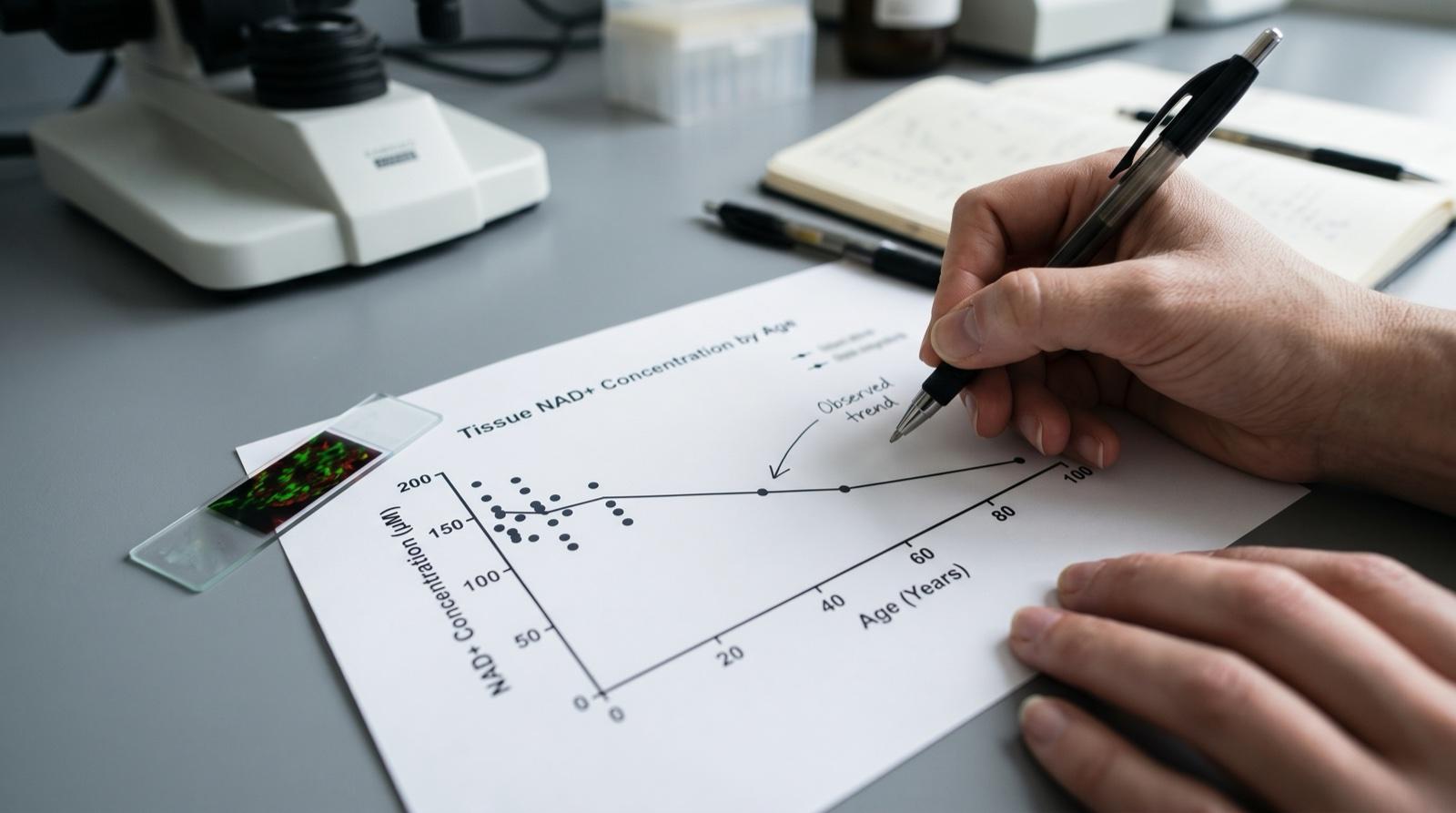
Brain NAD+ in Parkinson's vs healthy controls
The numbers above are composites — the precise baseline differences vary by study and brain region — but the pattern is consistent. Parkinson's patients have lower brain NAD+ than age-matched controls, and short-term NR supplementation closes part but not all of that gap. Whether the closure is large enough or fast enough to translate into meaningful disease modification is what NADPARK and its successors set out to test.
NADPARK: the first interventional NR trial in Parkinson's
NADPARK was conducted at the Trondheim Parkinson's Disease Research Group at the Norwegian University of Science and Technology, led by Charalampos Tzoulis and Kristoffer Brakedal, and published as Brakedal et al. in Cell Metabolism in March 2022 (PMID 35235774). It is registered as NCT03568968 on ClinicalTrials.gov. The Michael J. Fox Foundation provided partial funding alongside Norwegian public-research grants — a useful E-E-A-T signal because the Fox Foundation is one of the most rigorous non-academic funders in neurodegenerative disease research.
Trial design
Thirty newly diagnosed, treatment-naive Parkinson's patients — meaning they had not yet started levodopa or other dopaminergic therapy — were randomized 1:1 to receive either 1000 mg/day oral nicotinamide riboside (500 mg twice daily) or matched placebo for 30 days. The trial was double-blind and placebo-controlled. The primary outcome was change in cerebral NAD+ measured by 31P-MRS. Secondary outcomes included MDS-UPDRS-III motor scores, cerebrospinal fluid metabolomics, peripheral blood transcriptomics, and tolerability/adverse-event data.
What NADPARK found
Three findings stand out, and all three are scientifically robust even though the clinical magnitude was modest.
- Brain NAD+ rose measurably.The NR group showed a significant increase in cerebral NAD+ on 31P-MRS over the 30-day window. The placebo group showed no change. This is the first published demonstration that an oral NAD+ precursor raises in vivo human brain NAD+ in Parkinson's patients, and the first to do so under randomized double-blind conditions.
- Mitochondrial gene expression shifted. Peripheral blood transcriptomics revealed upregulation of pathways consistent with improved oxidative phosphorylation and mitochondrial biogenesis. CSF and plasma metabolomic signatures aligned with the transcriptomic findings — a coherent multi-omic picture of mitochondrial improvement, not a single-marker effect.
- Motor scores improved modestly. The NR group showed a small but statistically detectable improvement on MDS-UPDRS-III versus placebo. The absolute effect was on the order of a few points on a 132-point scale — clinically modest, but in the direction of benefit rather than worsening.
What NADPARK cannot tell us
The investigators were unusually careful in framing what their trial did and did not establish, and that framing matters because downstream coverage of the paper has often overstated the result.
- Surrogate endpoint, not motor outcome. The primary endpoint was brain NAD+, a surrogate biomarker. UPDRS-III improvement was a secondary endpoint and the absolute effect was small. A trial designed to detect motor benefit would need a larger sample and longer duration.
- Small sample. Thirty patients across two arms is underpowered for clinical effect estimation. Confidence intervals on the motor score change were wide.
- Short duration.Thirty days is sufficient to detect biochemical changes but inadequate for disease-progression inference. Parkinson's progresses over years.
- Treatment-naive cohort.Excluding patients on levodopa was the right design choice for measuring NR's isolated effect, but it leaves the practical question — does NR help patients already on dopaminergic therapy — unanswered.
NR-SAFE: tolerability over a longer window
The NR-SAFE arm and follow-up open-label extensions of the Trondheim program were designed to characterize tolerability of NR beyond the 30-day NADPARK window. The published findings (Brakedal et al. 2022 and subsequent reports from the same group) describe roughly 12 months of 1000 mg/day NR in early Parkinson's patients, with adverse-event rates not significantly different from placebo and no signals for hepatotoxicity, hematologic abnormality, or motor worsening attributable to NR.
Mild side effects — nausea, headache, flushing — occurred at low rates similar to those reported in non-Parkinson's NR trials (Martens et al. 2018 in healthy middle-aged adults; Conze et al. 2019 in healthy overweight adults). NR-SAFE therefore extends the safety window established in non-disease cohorts to a Parkinson's population without surfacing new toxicity signals.
N-DOSE: dose-finding for the next generation of trials
N-DOSE (NCT04568913) is the dose-finding follow-up the NADPARK investigators designed to characterize the brain NAD+ dose-response curve in Parkinson's patients beyond the 1 g/day NADPARK dose. The trial tests 1500 mg/day and 3000 mg/day NR over a longer treatment window, with cerebral NAD+ on 31P-MRS as a primary outcome alongside expanded tolerability and pharmacokinetic sampling.
The case for higher doses is straightforward: the 30-day brain NAD+ rise on NADPARK's 1 g/day was modest. If brain NAD+ saturation kinetics resemble what has been characterized in muscle and blood, higher doses may produce larger and more sustained brain NAD+ elevation — which is what a disease-modifying trial would need to test the hypothesis seriously. N-DOSE results will inform the dose selection for any subsequent Phase 3 trial powered for motor or progression endpoints.
Parkinson's NR clinical-trial timeline
Can NR cross the blood-brain barrier?
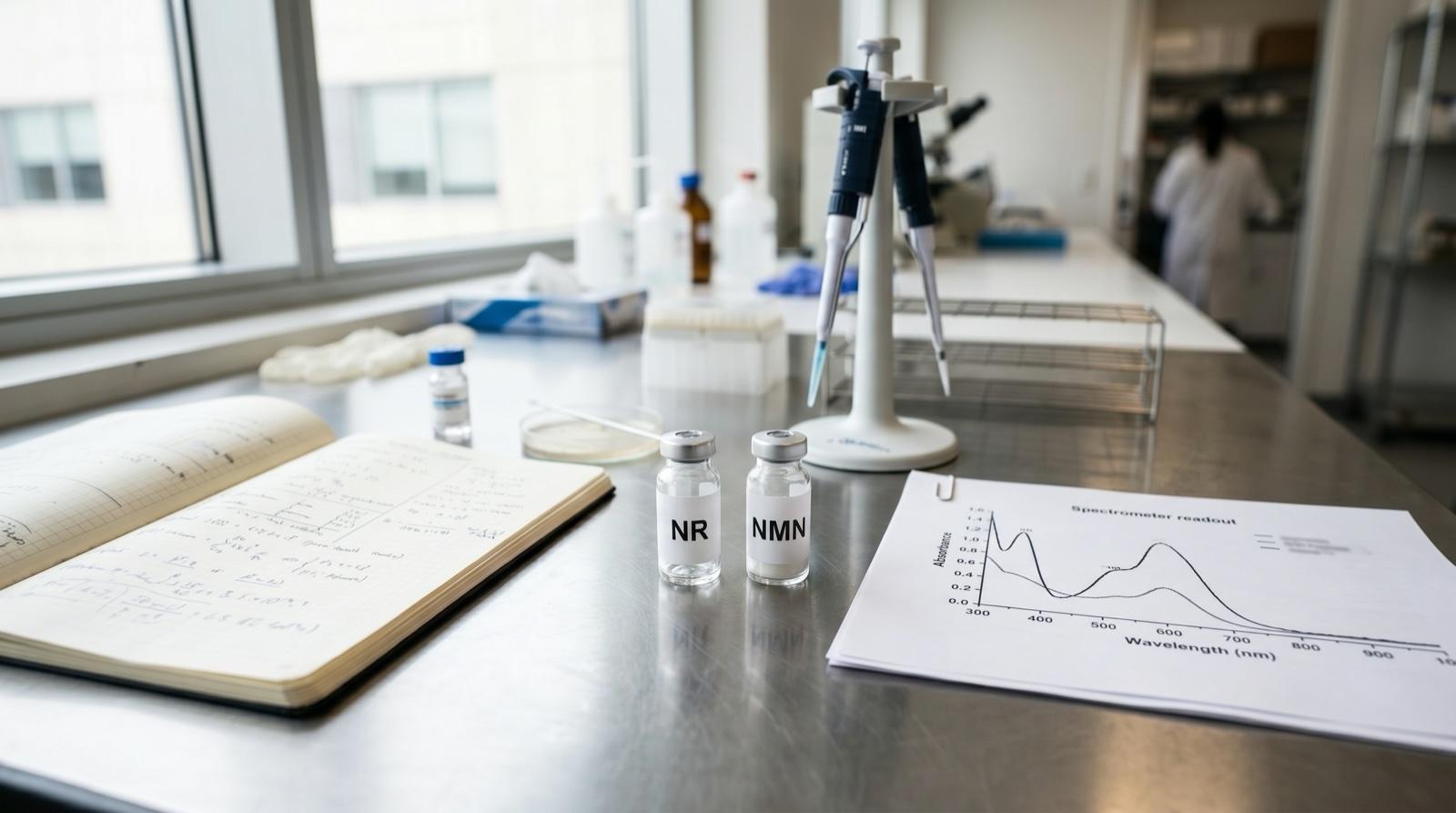
The honest answer is mostly no, and the brain NAD+ rise observed in NADPARK is mediated indirectly. Oral NR is rapidly converted in the liver and peripherally into NMNand NAD+, with downstream nicotinamide released into circulation. Circulating nicotinamide crosses the blood-brain barrier readily and feeds the brain's own salvage pathway, where NAMPT rebuilds central NAD+ from this peripheral substrate.
Some direct CNS uptake of NR via equilibrative nucleoside transporters has been reported in animal models (Liu et al., Cell Metab 2018, PMID 29514064), but the quantitative contribution appears small relative to the indirect peripheral conversion route. For practical purposes, oral NR is best understood as a peripheral NAD+ precursor whose CNS effects are mediated by the resulting rise in circulating nicotinamide and by systemic metabolic improvements that propagate to the brain.
How oral NR reaches brain NAD+
Mitochondrial dysfunction, alpha-synuclein, and the NAD+ rationale
Three Parkinson's pathologies converge on NAD+ biology in ways that make the precursor hypothesis defensible even before any clinical trial.
Complex I deficiency
Complex I (NADH:ubiquinone oxidoreductase) is the first and largest complex of the mitochondrial electron transport chain. It accepts electrons from NADH and passes them downstream to drive oxidative phosphorylation. Postmortem nigral tissue from Parkinson's patients shows a characteristic 30-40% reduction in complex I activity (Schapira et al., J Neurochem 1990, PMID 2154550). The MPTP toxin inhibits complex I and produces parkinsonism in humans and primates — the experiment of nature that established complex I as a bona fide Parkinson's target. Restoring NAD+ supplies complex I's substrate; whether substrate availability is the binding constraint when complex I itself is structurally damaged is a separate question that NADPARK's metabolomic shifts cautiously suggest, but cannot prove.
Alpha-synuclein aggregation
Alpha-synuclein protein aggregates — Lewy bodies — are the pathological hallmark of Parkinson's. Aggregated alpha- synuclein impairs mitochondrial function, increases oxidative stress, and amplifies NAD+ consumption by activating PARP enzymes in response to DNA damage. The NAD+ depletion is not just an independent age-related effect; it is partly a consequence of the disease itself. Restoring NAD+ does not clear alpha-synuclein aggregates, but it may relieve some of the secondary metabolic burden the aggregates impose.
PARP activation and DNA damage
Chronic oxidative stress in nigral neurons drives DNA damage, which in turn activates PARP1, which consumes NAD+ as its sole substrate to signal repair. In the Parkinson's brain, PARP activation is chronic rather than transient, drawing down nuclear NAD+ pools faster than the salvage pathway can refill them. Lehmann et al. (2017) showed that PARP1 activation accelerates alpha-synuclein aggregation, creating a feedback loop between aggregation, DNA damage, NAD+ depletion, and further aggregation. NAD+ precursors push back on the depletion arm of that loop without breaking the underlying cycle.
How does NADPARK fit alongside other Parkinson's mitochondrial trials?
Parkinson's mitochondrial pharmacology has a long history of promising mechanism and disappointing clinical results. The comparison below puts NADPARK in context.
| Intervention | Mechanism | Phase | Disease-modification result |
|---|---|---|---|
| Coenzyme Q10 (high-dose) | Electron transport chain cofactor | Phase 3 (QE3, 2014) | Negative — no benefit at 1200-2400 mg/day (Beal et al., JAMA Neurol 2014, PMID 24664227) |
| Creatine | ATP buffering | Phase 3 (LS-1, 2015) | Negative — trial halted for futility (Kieburtz et al., JAMA 2015, PMID 25668262) |
| Inosine (urate elevation) | Antioxidant via uric acid | Phase 3 (SURE-PD3, 2021) | Negative — no slowing of progression (Schwarzschild et al., JAMA 2021, PMID 34581738) |
| Nicotinamide riboside (NR) | NAD+ precursor / salvage substrate | Phase 1 (NADPARK), Phase 2 (N-DOSE ongoing) | Preliminary — biomarker improvement, modest motor effect, no Phase 3 data |
The pattern is sobering: every previous mitochondrial intervention with a mechanistic rationale at least as strong as NR's has failed when tested in adequately powered Phase 3 trials. NR's Phase 1 brain-NAD+ result is novel — earlier interventions did not directly demonstrate target engagement in the brain — but the leap from biomarker engagement to disease modification has repeatedly failed in Parkinson's. The defensible interpretation is cautious optimism about the biology and skepticism about the clinical claim until a powered, longer-duration trial reports out.
What this means for patients and clinicians
Three takeaways are worth internalizing if you or a family member has been newly diagnosed with Parkinson's and is wondering whether NR belongs in the protocol.
- NR is not an approved Parkinson's treatment in any jurisdiction. Levodopa, MAO-B inhibitors, dopamine agonists, and physical therapy remain the pillars of standard care. NR exists in the supplement market, but its supplement status is not a substitute for the disease-modifying evidence that approval would require.
- Trial participation is the most defensible route. If the biology is interesting to you, the strongest move is to ask your neurologist about active Parkinson's NR trials rather than self-supplementing. Trial participation includes monitoring, structured outcome measurement, and contributes to the evidence base. Self-supplementation does none of those things.
- Long-term safety data does not yet exist. NR-SAFE establishes ~12 months of acceptable tolerability, but Parkinson's is a multi-decade disease. Decisions to chronically supplement should involve the neurologist managing the patient's broader pharmacotherapy, not just an internet purchase.
Adjacent NAD+ evidence in neurology
NAD+ precursors have been tested in a growing list of neurological conditions where mitochondrial dysfunction is implicated. The broader evidence base provides useful context for interpreting the Parkinson's data.
- Ataxia telangiectasia. Veiby et al. (2024) reported that NR raised cerebellar NAD+ and improved ataxia scores in a small open-label trial — closer in design to NADPARK than to a randomized treatment trial.
- Mild cognitive impairment. Multiple small trials have tested NR in MCI cohorts, with mixed cognitive results and consistent peripheral NAD+ elevation. None have used 31P-MRS for brain target engagement.
- Long COVID and post-viral fatigue. Mitochondrial dysfunction is a leading hypothesis for chronic post-viral fatigue, and NAD+ precursor trials are in early stages.
- Friedreich's ataxia. Mitochondrial dysfunction is central, and small NR pilots have been reported with acceptable tolerability.
Across these adjacent indications, the pattern is consistent: biomarker-level evidence of target engagement, modest or inconsistent clinical signals, and no Phase 3 disease-modification data yet. Parkinson's sits inside this broader picture rather than standing alone, and that context is part of what makes the cautious framing defensible.
What we still do not know
Three questions remain genuinely open after NADPARK and NR-SAFE, and they are exactly the questions a Phase 3 trial would have to answer before NR could be considered for clinical use.
- Does brain NAD+ elevation translate to motor benefit?NADPARK's motor signal was small and on a surrogate timescale. Whether 12-24 months of NR produces a clinically meaningful UPDRS difference versus placebo is the central unanswered question.
- Does NR slow disease progression?Symptom improvement and disease modification are different claims. Progression slowing requires longitudinal trials with imaging or biomarker progression endpoints over years, none of which yet exist for NR in Parkinson's.
- What is the right dose?NADPARK's 1 g/day may be substantially below the brain NAD+ saturation point. N-DOSE (1500-3000 mg/day) is the first attempt to characterize that curve in the relevant patient population.
Bottom line
Three trials — NADPARK, NR-SAFE, and the ongoing N-DOSE — have established that 1 g/day oral NR raises brain NAD+ measurably in early Parkinson's patients, is generally well tolerated for at least a year, and produces a small motor-score improvement on surrogate timescales. None of these findings amounts to evidence that NR treats, slows, or modifies Parkinson's disease in any clinically actionable sense.
The biology is well-grounded. Complex I deficiency, alpha-synuclein toxicity, and PARP-driven NAD+ depletion converge on a substrate that NR replenishes. The clinical translation requires the same unglamorous work that every other mitochondrial intervention in Parkinson's has had to do: longer trials, larger samples, rigorous disease-progression endpoints, and direct head-to-head comparison with standard care. Until that work is done, NR sits where coenzyme Q10 and creatine sat in the late 2000s — a promising hypothesis with biomarker support and a binding need for Phase 3 data.
For patients today, the most useful action is to ask a neurologist about active clinical trials. For the field, the next milestone is the N-DOSE readout and whatever Phase 2/3 trial design the Trondheim group and its collaborators bring forward next.
Frequently asked questions
- Does NAD+ help Parkinson's disease?
- Current evidence is preliminary. The 30-day NADPARK Phase 1 trial (Brakedal et al., Cell Metabolism 2022, PMID 35235774) showed 1 g/day nicotinamide riboside (NR) raised brain NAD+ measurably on 31P-MRS in 30 patients with early Parkinson's, and produced a modest improvement in MDS-UPDRS-III motor scores versus placebo. The clinical effect was small, the sample was small, and no Phase 3 trial has confirmed motor or disease-modifying benefit. NAD+ precursors are not approved as a Parkinson's treatment in any jurisdiction.
- What is the NADPARK study?
- NADPARK is a 30-day randomized, double-blind, placebo-controlled Phase 1 trial (NCT03568968) conducted at the Trondheim Parkinson's Disease Center, published by Brakedal et al. in Cell Metabolism 2022 (PMID 35235774). Thirty newly diagnosed, treatment-naive Parkinson's patients received either 1 g/day oral NR or placebo. The primary outcome was change in brain NAD+ measured by 31-phosphorus magnetic resonance spectroscopy (31P-MRS). NR raised cerebral NAD+, shifted the cerebral NAD+/NADH ratio, altered metabolomic and transcriptomic signatures consistent with mitochondrial improvement, and produced a small motor-score improvement on MDS-UPDRS-III.
- Is nicotinamide riboside safe for Parkinson's patients?
- Short-term tolerability appears acceptable. The NR-SAFE extension and follow-up dosing studies report 1000 mg/day NR is well tolerated for at least one year in Parkinson's cohorts, with no serious adverse events attributable to NR (Brakedal et al., 2022 and subsequent open-label extensions from the Trondheim group). Mild side effects — nausea, flushing, headache — occur at rates similar to placebo. Long-term safety beyond 12 months in Parkinson's specifically has not been established, and patients on Parkinson's medications should not self-supplement without consulting their neurologist because NR alters NAD+-dependent metabolism that may interact with levodopa pharmacodynamics in ways that have not been formally studied.
- Can NR cross the blood-brain barrier?
- NR does not cross the blood-brain barrier intact in meaningful quantities. The cerebral NAD+ rise observed in NADPARK is mediated primarily by indirect routes: NR is converted in the liver and peripherally to NMN and NAD+, downstream nicotinamide is released into circulation, and brain NAMPT salvage activity uses circulating nicotinamide to rebuild central NAD+. Some direct CNS uptake of NR via equilibrative nucleoside transporters has been reported in animal models, but this is a minor pathway. The 31P-MRS signal in NADPARK confirms that whatever the mixed delivery routes, oral NR does raise brain NAD+ measurably in Parkinson's patients within 30 days.
- What dose of NR is being studied for Parkinson's disease?
- NADPARK used 1000 mg/day NR (500 mg twice daily) for 30 days. The N-DOSE follow-up trial (NCT04568913) is a dose-finding study testing 1500 mg and 3000 mg daily over a longer treatment window to characterize the brain NAD+ dose-response curve and confirm tolerability at higher doses. Doses above 1 g/day are being explored because the 30-day brain NAD+ response in NADPARK was modest and may benefit from saturation kinetics that lower doses do not achieve. Optimal long-term dosing for disease modification is not yet defined.
- What did the NR-SAFE trial show?
- NR-SAFE refers to the safety and tolerability arm and extension of the Trondheim NR-Parkinson's program. The published findings (Brakedal et al. 2022 and follow-up work) report 1000 mg/day NR taken daily for periods extending to and beyond one year is generally well tolerated in early Parkinson's patients, with adverse-event rates not significantly different from placebo. There are no signals for hepatotoxicity, hematologic abnormalities, or motor worsening attributable to NR. NR-SAFE establishes basic short- to medium-term safety; it is not a disease-modification trial and cannot determine whether NR slows Parkinson's progression.
- Should Parkinson's patients take NAD+ supplements?
- There is no clinical recommendation to do so as of 2026. The published evidence is limited to small Phase 1-2 trials with surrogate endpoints (cerebral NAD+ levels, short-term motor scores) and does not include the long-duration, large-cohort Phase 3 data needed for treatment guidelines. Patients interested in NR should ask their neurologist whether they qualify for an active clinical trial — trial participation is the fastest route to both potential benefit and rigorous monitoring. Self-supplementation outside a trial may interact with disease tracking, complicate medication adjustments, and provides no monitoring framework for adverse events.